How to Find the Best Roofer in Vancouver, WA: A Homeowner's Vetting Checklist
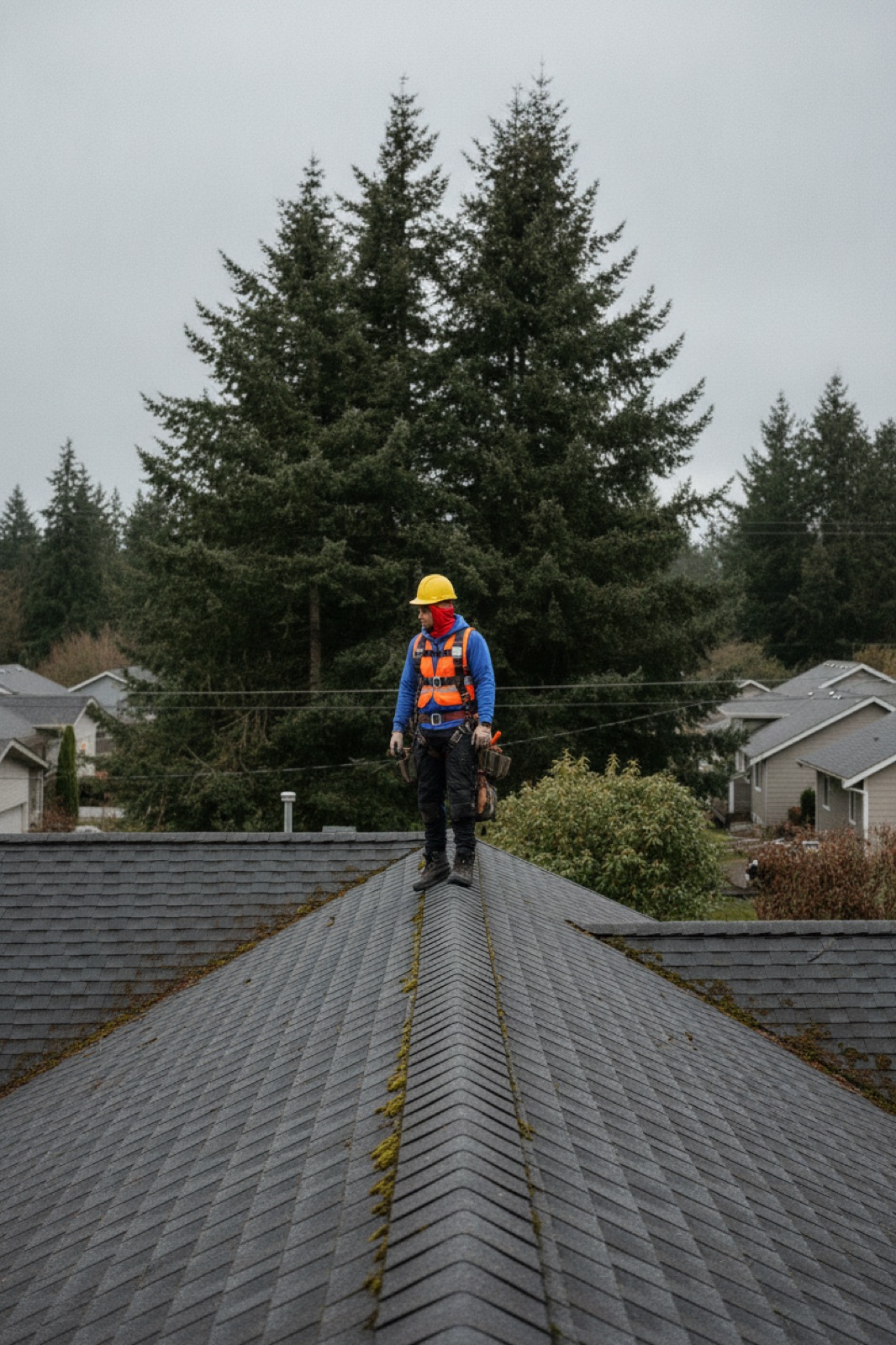
The best roofer in Vancouver, WA is the one whose license, insurance, and local permit history check out before they set foot on your roof. Google stars matter. So does price. But neither tells you whether a contractor can legally work on your home or carry the liability if something goes wrong.
This checklist gives you four concrete steps to vet any contractor, plus the questions worth asking on a first call.
Why the Best Roofer in Vancouver, WA Is the One You Can Verify
Roofing is one of the few home improvements where the selection error stays invisible until it is expensive. A contractor who skips permits, carries no workers comp, or disappears after a windstorm leaves you holding the liability. In Clark County, you have free public tools to check any contractor's standing before you commit.
Star ratings tell you whether past customers were satisfied. Public records tell you whether the company is legally permitted to work on your home. Both matter. The public records check takes two minutes and is worth doing first.
Step 1: Run a Washington State L&I Check (Takes 2 Minutes)
Washington State requires every roofing contractor to be registered with the Department of Labor and Industries (L&I). You can search any company name or UBI number at lni.wa.gov at no cost.
What to look for in the results:
- Active registration status. An expired or inactive status means the contractor cannot legally perform work in Washington right now.
- Bond and liability coverage on file. L&I tracks whether coverage is current. A lapsed bond shows in the record.
- Complaint history. The same search surfaces any formal complaints filed against the contractor through the state.
Any roofer working in Vancouver, Camas, Battle Ground, Ridgefield, or anywhere else in Clark County must appear in the L&I database with an active registration. If they do not, stop there.
Step 2: Ask About Clark County Permits and Why They Protect You
Clark County requires a building permit for most full roof replacements. Minor repairs sometimes fall below the threshold, but any complete tear-off and re-roof triggers the permit requirement under Washington State and county code.
A roofer who offers to skip the permit to save you money is not saving you anything.
Here is what a permit actually does for you:
- It creates an inspection record attached to your property in the county system, which matters when you sell.
- It confirms the installation meets current IRC and local code requirements for Southwest Washington, including wind and snow load specs.
- It protects you if a future storm causes damage and you file an insurance claim. Insurers can deny claims for unpermitted work, leaving you without coverage on a loss that should have been paid.
Ask every contractor you speak with: "Will you pull the Clark County permit, or am I responsible for that?" A qualified local roofer pulls it as part of their standard process. A vague answer is a red flag.
For more on what a complete roofing project involves in Clark County, the Vancouver WA roofing overview covers scope and what to expect.
Step 3: Spot Storm Chasers Before They Spot You
Vancouver sits in the Columbia River corridor. After significant wind events roll through the Portland metro, or when hail strikes the Southwest Washington lowlands, out-of-area crews follow the damage trail into Clark County. They knock on doors, produce fast estimates, and frequently disappear after collecting a deposit.
Signs you may be dealing with a storm chaser:
- No Washington State L&I registration, or a registration in another state
- Pressure to sign on the same day as the estimate
- No local permit history in Clark County
- A PO box or out-of-state address on the contract
- A payment structure that asks for more than 10 to 15 percent upfront before work begins
The PNW climate creates specific conditions that matter here. Vancouver roofs deal with moss accumulation on north-facing slopes, wind-driven rain coming off the Coast Range, and freeze-thaw cycles that run through the winter months near the Washington and Oregon border. A crew that typically works in drier climates and follows storms north is not equipped the same way a crew that has spent years working these conditions is.
Local permit history is a more reliable signal than review count. A contractor with a track record of pulled permits in Clark County over multiple years is embedded in this market. A contractor with no local permit history is passing through.
Step 4: What Insurance Actually Needs to Cover in WA
Washington State requires contractors to carry general liability insurance. It also requires either active workers compensation coverage or a valid solo-operator exemption certificate for one-person operations.
Ask for a certificate of insurance before any work begins. The certificate should show:
- General liability coverage (a $1 million per occurrence minimum is a reasonable floor for residential work)
- Workers compensation coverage, or the exemption certificate number for sole operators
- Your property listed as an additional insured for the duration of the project
Why this matters: if a worker is injured on your property and the contractor carries no workers comp, your homeowner's policy can be exposed to the claim. Workers comp gaps are among the most common financial surprises homeowners encounter after hiring an underinsured crew, and they are preventable with a five-minute document check.
You can verify a certificate directly with the issuing insurer by calling the number on the document. A legitimate contractor will not object to this.
The Questions Worth Asking on the First Call
Five questions that sort a contractor list quickly:
- "What is your Washington State L&I registration number?" A licensed contractor knows it immediately. Hesitation is notable.
- "Will you pull the Clark County permit?" Yes or no. No elaboration needed.
- "How long have you been working in Clark County specifically?" Years serving the greater Portland market does not equal local permit history in Clark County.
- "Can you send a certificate of insurance before we schedule the estimate?" A properly covered company sends it within the hour.
- "Will your own crew perform the work, or will you subcontract it?" Neither answer is automatically disqualifying, but you should know who will be on your roof and that they are covered under the policy you just reviewed.
Price matters. These questions filter out the contractors who would cost you far more than any price difference after a failed inspection, a denied insurance claim, or an unresolved workers comp dispute.
How Safecover Meets Every Point on This List
Safecover is Washington State registered and pulls Clark County permits on every replacement project where code requires it. Our crew is based in Southwest Washington, and we work Clark, Cowlitz, and Lewis Counties year-round.
We carry general liability and workers compensation coverage, and we will send a certificate of insurance before your estimate is even scheduled.
If you want to put this checklist to work, start by reading what past customers in Clark County have said on our reviews page. Then reach out for a written estimate with a clear scope, permit plan, and no pressure to sign the same day.
Request a Safecover estimate when you're ready.
Free Roof Estimate
Questions after reading this? Our local team is happy to help. No pressure, no obligation.
Request Free Estimate(360) 304-8055Need a Roof Repair or Replacement?
Get a free, no-obligation estimate from our roofing experts today.