Does Homeowners Insurance Cover Roof Repair in Southwest Washington?
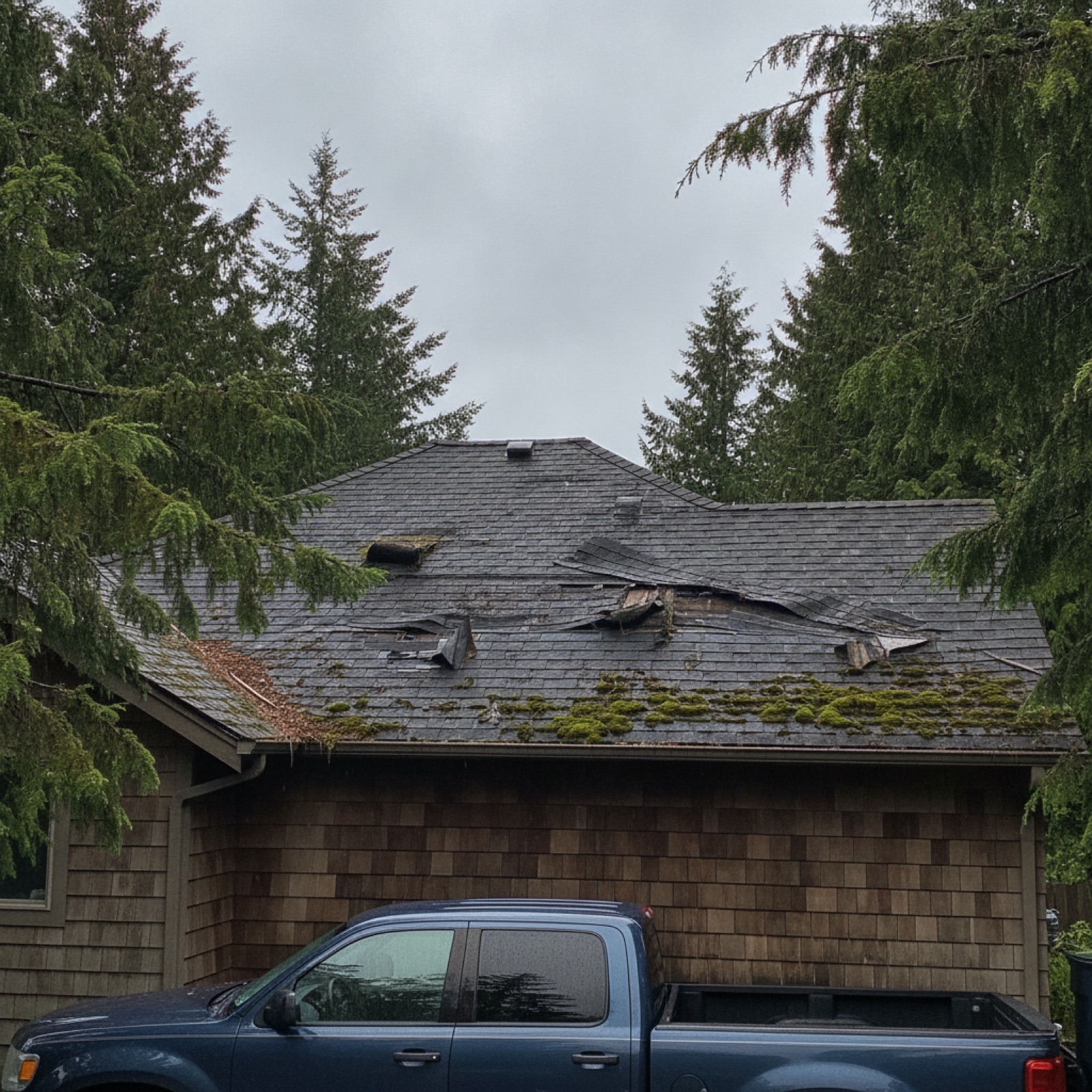
Homeowners insurance can cover roof repair after storm damage, but only for sudden, accidental losses. If your roof fails because of age, deferred maintenance, or moss buildup, your insurer will likely deny the claim. Here is what Southwest Washington homeowners need to know before they pick up the phone.
What Homeowners Insurance Covers (and What It Excludes)
A standard HO-3 homeowners policy covers your roof for "sudden and accidental" physical damage caused by named perils: wind, hail, falling trees, and fire are the most common. It does not cover gradual deterioration, wear and tear, or damage that developed over time without being reported.
The fine print that catches most homeowners: if an adjuster determines that existing neglect contributed to the damage, the carrier can reduce the payout or deny the claim entirely. In practice, this means the condition your roof was in before the storm matters as much as the storm itself.
What standard policies exclude:
- Damage caused by moss, algae, or lichen (classified as maintenance neglect)
- Flashing failures or seam separation from freeze-thaw cycling that built up over multiple seasons
- Roof collapse caused by gradual sagging rather than a single event
- Cosmetic damage only, with no functional impairment (varies by policy)
Flood damage is a separate policy altogether. If a storm backs up a drain and water enters through the roof, that is typically a homeowners claim. If rising groundwater is involved, you need separate flood coverage.
Weather Events in Southwest Washington That Typically Qualify for a Claim
The Columbia River Gorge acts as a natural wind corridor through Clark County. Communities like Camas and Washougal regularly see sustained winds that exceed the design load of older asphalt shingle roofs, lifting tabs, cracking ridgecaps, and breaking seals along hip lines. These are exactly the events insurers are designed to cover.
Freeze-thaw cycles in winter hit Cowlitz and Lewis County harder than the I-5 corridor. In Longview, Chehalis, and Centralia, temperatures fluctuate around freezing more often than they do in Portland. Water works into small gaps during the day and expands overnight, which pries apart flashing, loosens step flashing around chimneys, and opens seams at valley joints. A single hard freeze following a wet week can cause the kind of acute failure that qualifies as a covered loss.
Lewis County communities like Morton and Randle are also in the ice-storm zone. Ice loading from branch falls is a covered peril under almost every policy. A large fir branch dropping onto a 20-year-old roof in Morton after an ice storm is a straightforward claim. Document the branch, document the impact point, and do not remove anything until you have photos.
Claims that typically qualify in this region:
- Wind damage from Gorge corridor events (missing shingles, lifted ridge caps, blown-off flashing)
- Branch or tree fall from ice storms, wind events, or heavy wet snow
- Hail damage (less frequent than further east, but it does occur)
- Ice damming that causes interior water intrusion, when the dam itself resulted from a storm event
Why Moss, Algae, and Deferred Maintenance Can Sink Your Claim
This is the issue that derails more Southwest Washington roof claims than anything else. The PNW overcast climate and persistent moisture create near-perfect conditions for moss and algae growth on asphalt shingles. What looks like a normal roof from the street can have significant biological growth in the valleys and on north-facing slopes.
When an adjuster arrives, they photograph everything. Moss holdfast roots lift shingle tabs and break down the mat below. Algae staining signals moisture retention. Both tell an adjuster that the roof was not being maintained, and that gives the carrier grounds to argue that the storm finished what neglect started.
Washington State insurance law requires insurers to acknowledge a claim within 10 business days of filing, but that does not mean they are in a hurry to approve it. An adjuster who finds significant moss growth, missing granules across a wide area, or cracked sealant along multiple courses will often attribute a portion of the loss to pre-existing condition, reducing the payment.
The practical takeaway: annual roof maintenance, including moss treatment and gutter clearing, is not just good practice. It is your defense against a partial denial.
How to Document Roof Damage Before Calling Your Insurer
Do not wait for the adjuster. Washington State's 10-business-day response window means you have a firm deadline, but the documentation you collect before that call can be the difference between approval and denial.
What to capture immediately after a storm event:
- Date-stamped photos from the ground showing visible damage (lifted shingles, displaced ridge cap, fallen branches)
- Photos of any interior water intrusion, including wet insulation, stained ceilings, or water on the attic floor
- A photo of the branch, tree, or debris that caused impact damage, still in place before removal
- Screenshots of weather data for your zip code on the date of the storm (Weather Underground or the National Weather Service has historical data by station)
- Any previous inspection reports or maintenance records that show the roof was in serviceable condition before the event
If you have a recent roof inspection report, attach it to your claim. It establishes a documented baseline and removes the carrier's ability to claim damage was pre-existing.
What Happens After You File: The Adjuster Visit and Repair Scope
After you file, the insurer assigns an adjuster, who will schedule a visit to inspect the roof. The adjuster writes a scope of loss, which is the list of repairs they are willing to pay for. This scope drives the check.
A few things to know:
- Adjusters use estimating software (Xactimate is the most common) that prices repairs at regional averages. Those averages do not always reflect current material and labor costs in Clark or Cowlitz County.
- Clark County building codes require permits for roof work that exceeds certain scope thresholds. If the adjuster approves a repair that actually requires a full replacement to meet code, you have grounds to request a supplement.
- You are allowed to bring a licensed contractor to the adjuster visit. This is not adversarial; it is standard practice. A contractor who can point out damage the adjuster missed, or explain why a code-compliant repair requires more than a patch, often results in a revised scope.
- If the insurer's scope and the contractor's scope do not agree, you can invoke the appraisal process defined in your policy.
Why a Professional Roof Inspection Strengthens Your Claim
A documented roof inspection before a storm season gives you a before-and-after record that is difficult for an adjuster to argue with. It also catches moss, failing flashing, and cracked sealant before they give the carrier a reason to reduce your payout.
After a loss event, a professional inspection report that identifies the specific damage, the probable cause, and the recommended scope of repair gives you a written record to hand to the adjuster. It reframes the conversation from "we'll tell you what we'll pay" to "here is what a licensed inspector found."
For older roofs in Longview, Chehalis, or the Clark County communities that see regular Gorge wind events, an annual or biennial inspection is a reasonable cost against the risk of a denied or reduced claim when it matters most.
If you have storm damage or want a documented baseline before the next rain season, contact Safecover for a professional roof inspection. We work in Clark, Cowlitz, and Lewis County and can provide a written report you can use with your insurer.
Free Roof Estimate
Questions after reading this? Our local team is happy to help. No pressure, no obligation.
Request Free Estimate(360) 304-8055Need a Roof Repair or Replacement?
Get a free, no-obligation estimate from our roofing experts today.