Is Your Roof Damage a True Emergency? A Triage Guide for Vancouver WA Homeowners
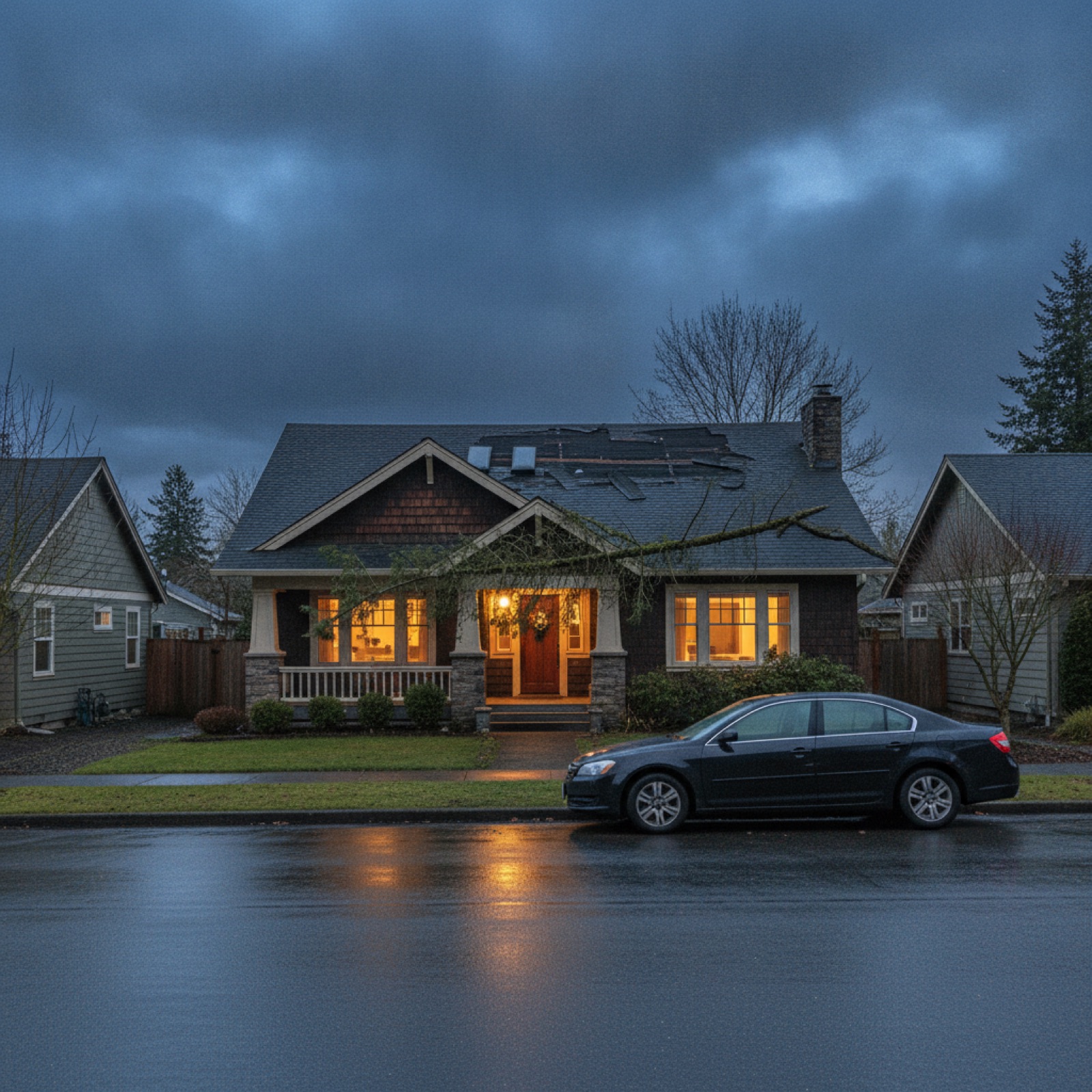
After a storm hits your Vancouver home, what the damage looks like matters less than whether it is getting worse right now. Active water coming through the ceiling and a few loose shingles on a dry afternoon are both reasons to call a roofer, but they sit at opposite ends of the urgency scale. Getting that read right determines what you do in the next 30 minutes.
What Counts as a Roofing Emergency (and What Does Not)
A true emergency roof repair in Vancouver WA means active water intrusion, structural exposure, or a condition that will significantly worsen before you can get a normal appointment. A non-emergency is damage that is contained and slow-moving, something that won't change materially in 24 to 72 hours.
The distinction matters more here than in most parts of the country. Clark County averages roughly 44 inches of rain per year, concentrated from October through March. Any breach that opens during that window is entering six months of near-continuous wet weather. A problem that could wait a week in July can cost you ceilings, insulation, and framing by November.
Five Signs Your Vancouver Roof Needs a Call Today
1. Water is actively dripping or staining inside. If you see water on a ceiling, on interior walls, or dripping from a light fixture, the barrier is broken. Call now for emergency tarping at minimum.
2. A large section of shingles or decking has lifted or blown off. Columbia River Gorge east wind events regularly sustain 40 to 60 mph through Vancouver. A strong Gorge event can strip a full section of shingles in seconds, leaving raw decking exposed to whatever storm follows.
3. A tree limb or debris has punctured the surface. Punctures do not self-seal. If you can see daylight from your attic, or the damage is clearly deeper than surface shingles, treat it as urgent.
4. Flashing is visibly pulled away from a chimney, skylight, or wall junction. Detached flashing looks intact from the ground but funnels rain directly behind your walls. It is one of the fastest paths to hidden interior water damage.
5. You notice structural movement or a sagging ceiling. Flex in attic framing after an impact, or a ceiling that visibly bows, is a structural problem that needs eyes on it today.
Damage That Looks Scary but Can Safely Wait 24 to 72 Hours
- A handful of missing shingles during dry weather with no rain in the near-term forecast
- Granule loss visible in gutters or downspout splash zones (indicates shingle aging, not acute failure)
- Moss growth concentrated in a valley channel, with no active leak below it
- A small, dry attic stain that is not spreading and has no visible wet spot directly above it
- Surface cracking on older shingles when the underlying deck is still intact
These still need attention, but they will not become emergencies overnight if conditions stay dry.
What to Do in the Next 30 Minutes Regardless of Severity
These steps cost nothing and protect you whether you end up filing an insurance claim or paying out of pocket.
Take photos immediately. Insurers expect documentation taken close in time to the damage event. Do this before touching anything or covering anything. Shoot wide exterior shots first, then close-ups of every visible damage point, then attic shots if you can safely access the space. Timestamp everything.
Check your attic with a flashlight. Look for wet insulation, dripping water, staining on rafters, or daylight through the decking. What you find there tells you whether you have a surface problem or an interior one.
Move valuables away from affected interior areas. If there is any ceiling discoloration or soft spots underfoot in the attic, slide furniture clear and put buckets in position. Saturated drywall can hold water for hours and then release it all at once.
Call your roofer's emergency line if you have water coming in or major structural exposure. Most reputable contractors in the Vancouver area can get eyes on a true emergency within a few hours.
Why Clark County Weather Turns Small Problems Into Big Ones Fast
The Columbia River Gorge is a natural wind tunnel. East wind events push through at sustained speeds that strip shingles, lift ridge caps, and separate flashing from sealed joints. These events move fast and often hit in the evening, so damage sits overnight before anyone sees it in daylight.
Freeze-thaw cycles along the I-5 corridor in January and February add a second mechanism. Water works into a hairline crack during a wet afternoon, temperatures drop overnight, the water expands, and a minor crack becomes an open split by morning. Older homes in Hazel Dell, Fruit Valley, and Orchards are especially exposed to this. Original 1970s and 1980s shingles in these neighborhoods are often past their expected service life, and aged shingles have far less flexibility in cold temperatures.
Northwest-facing pitches throughout Clark and Cowlitz County collect moss and organic debris in valley channels. During a heavy rain event, those channels concentrate flow at exactly the spots where two roof planes meet. Those junctions are also common locations for flashing and lap joints. A partially blocked valley during a 2-inch rain event can back water under shingles that would otherwise drain cleanly.
Temporary Steps You Can Take Before a Roofer Arrives
If you cannot get a contractor on-site immediately and water is actively entering the home:
- Lay a poly tarp over the ridge and extend it several feet past the damaged area on each side. The tarp must go over the ridge so it sheds rain rather than pooling on top of the damage.
- Roofing cement or butyl caulk applied to a lifted flashing joint buys hours, not weeks. Use it as a stop-gap only.
- Interior containment matters as much as exterior protection. A 5-gallon bucket under a drip and a garbage bag over attic insulation both limit secondary damage while you wait.
Do not walk on a wet or structurally compromised roof without proper safety equipment. Ground-level documentation is safer and often gives you nearly as much information.
When to File an Insurance Claim and What to Document First
For storm-related damage, document first and call your insurer second. Photos taken before any repairs or tarping carry more weight in an adjuster's review than photos taken after the scene is altered.
Capture: wide exterior shots of the whole home, close-ups of every visible damage point, attic photos showing wet spots or staining, and photos of any debris still on or near the roof.
Note the storm time as precisely as you can. Insurers routinely correlate claims against National Weather Service records, and a time-stamped photo taken the same evening as a documented wind event strengthens your case considerably.
Keep receipts for emergency materials and any temporary labor. Most homeowners policies cover reasonable mitigation costs.
One permit note: a full roof replacement in Clark County requires a building permit. Emergency patch and repair work typically does not, though your contractor should confirm the scope before work begins.
How Safecover Handles Emergency Calls in the Vancouver Area
Safecover takes emergency calls from Vancouver and the surrounding Clark County area and can arrange same-day triage for active leaks and major storm damage. The priority on an emergency call is stopping active water intrusion first, then documenting the full scope, then giving you a straight read on whether you are looking at a patch, a section repair, or a full replacement.
If you are unsure whether what you are seeing warrants a call, err toward calling. A five-minute phone conversation costs nothing and can prevent a ceiling collapse that costs thousands.
Reach the Vancouver area's local roofing team for a no-pressure assessment.
Free Roof Estimate
Questions after reading this? Our local team is happy to help. No pressure, no obligation.
Request Free Estimate(360) 304-8055Need a Roof Repair or Replacement?
Get a free, no-obligation estimate from our roofing experts today.