Repair or Replace? How to Decide When Your Southwest Washington Roof Is Failing
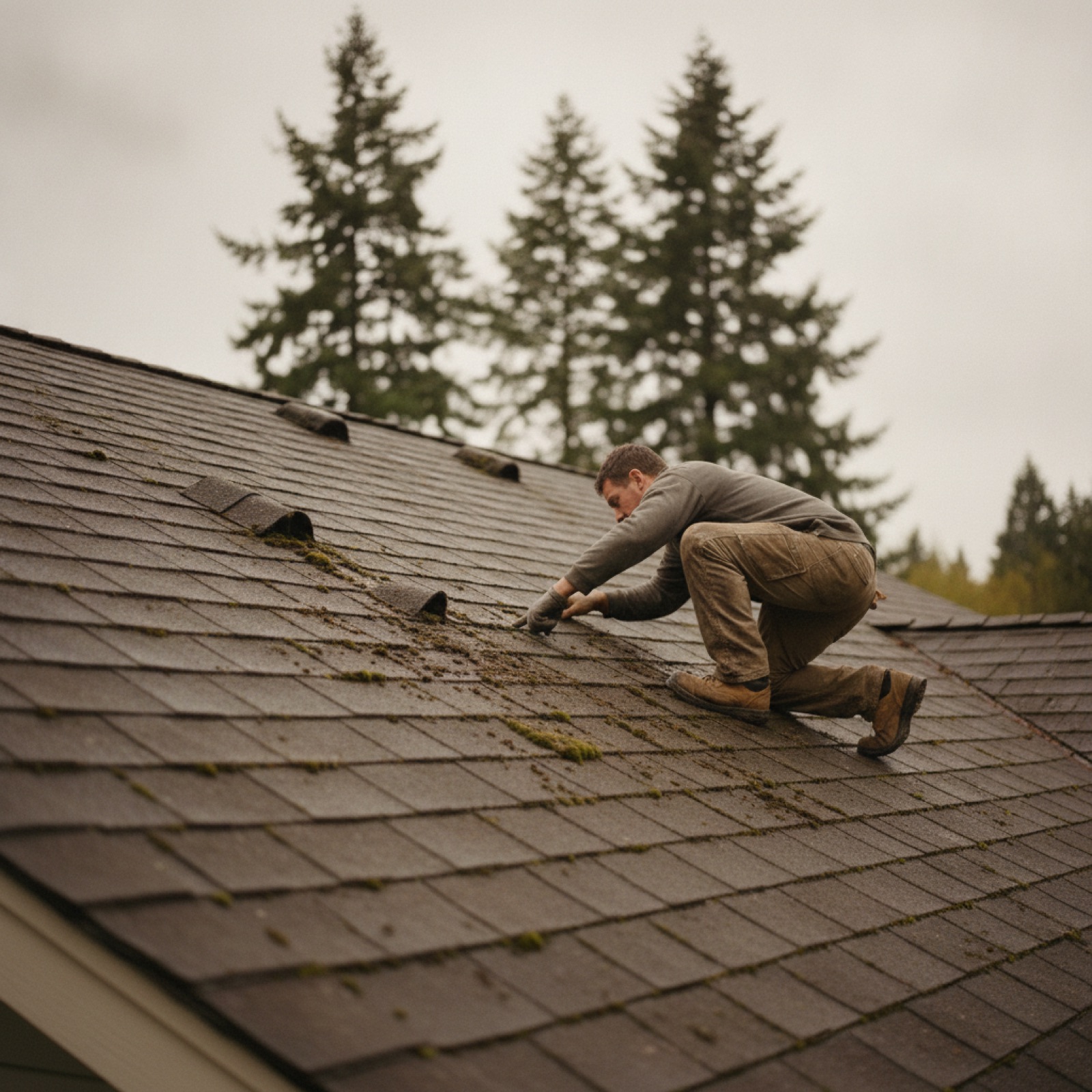
If you are staring at a water stain on your ceiling or missing shingles after a wind event, the question is not "how bad is this?" The real question is whether you are looking at an isolated problem or a roof that is already in general decline.
The short answer: if your roof is under 15 years old and the damage is contained to one area, repair is almost always the right call. If the roof is 25 or more years old, or if damage is showing up in multiple locations, replacement is likely the more honest answer. Everything in between depends on a few specific factors, which this guide walks through.
The Question You Actually Need to Answer First
Before you think about cost, ask this: is the damage isolated or widespread?
A single area of storm damage, a few missing shingles after a wind event, or one flashing failure at a chimney are contained problems. A roofer can address them without touching the rest of the roof.
But if you are seeing granule loss across multiple slopes, soft spots in several locations, water stains on ceilings in different rooms, or moss covering large sections, the damage is already distributed. Fixing one symptom leaves the others developing in the background.
Get an inspection before committing to either path. A professional roof inspection takes about an hour and tells you things a ground-level look simply cannot, including the condition of the deck underneath the shingles.
Signs Your Roof Is a Good Candidate for Repair
- Age under 15 to 20 years. Composition shingles are rated for 25 to 30 years. A roof with useful life remaining is worth repairing if the damage is limited.
- Isolated damage. One valley, one side of a ridge, or a specific-event cause like a fallen branch or hail strike is containable.
- Sound deck underneath. If the sheathing is dry and structurally solid, a patch or section re-roof can hold.
- Flashing failure on an otherwise newer roof. Flashings at chimneys, skylights, and walls sometimes fail before the shingles do. Replacing flashing alone is a legitimate repair.
Signs It Is Time for Full Replacement
- Roof at or past 25 years old. Most composition shingle roofs in the PNW reach their effective lifespan between 25 and 30 years. After that, you are repairing a roof in overall decline.
- Granule loss across multiple slopes. Granules protect the asphalt layer from UV and moisture. Heavy accumulation in gutters, or bare patches across different roof sections, signals the shingles are approaching end of life.
- Multiple separate leak points. Two or three unrelated leak locations means general failure, not a single problem.
- Soft or spongy decking. This means moisture has already compromised the structural sheathing. Repairs on top of rotting deck do not last.
- Daylight visible through the attic. If light is getting in, so is water, and it has been for a while.
How Southwest Washington's Climate Shifts the Calculation
This is where local context genuinely changes the math.
The housing stock across Clark, Cowlitz, and Lewis counties skews heavily toward homes built between the 1970s and 1990s. That puts a large number of roofs at or past the 25 to 30 year mark right now. If your home was built in that window and you have not replaced the roof, you may be closer to replacement than repair regardless of the current damage.
Vancouver averages nearly 40 inches of rain per year. Longview and Chehalis run wetter. That sustained moisture load accelerates granule loss and creates ideal conditions for moss, which is endemic across the PNW. Moss is not cosmetic: it lifts shingle edges and forces water under the deck within a few seasons if left untreated. A roof with significant moss infiltration may look intact from the ground but be doing real structural damage underneath.
Freeze-thaw cycles between November and March are a separate problem. Water enters small cracks or lifted shingle edges, freezes, expands, and opens those gaps further. A minor repair deferred past fall can become a substantially larger failure by spring. The cost of waiting through winter is real and often underestimated.
Wind-driven rain off the Columbia River Gorge creates specific failure points at flashing and ridge caps. A patch that addresses visible shingles but ignores compromised flashing will leak again in the next significant weather event.
The 50% Cost Rule and When It Applies Here
A widely used rule of thumb in roofing: if repairing your roof costs more than 50% of what a full replacement would cost, replace it.
The logic holds up. A repair on an aging roof does not reset the clock. You pay half the cost of replacement and you still have an old roof that will need full replacement in a few years anyway, essentially pre-paying for replacement at a premium.
For Southwest Washington, full replacement on a typical 2,000 to 2,500 square foot home generally runs between $12,000 and $20,000 depending on pitch, complexity, and materials. You can see current cost ranges and the specific factors that affect them in the Vancouver roof replacement cost guide. If a contractor is quoting $6,000 or more to repair a 28-year-old roof, the 50% rule points clearly toward replacement.
The one exception: if a repair is genuinely isolated and the rest of the roof has verifiable life remaining, the rule applies differently. This is exactly why the inspection step matters. A roofer who has walked your entire roof can tell you whether the unaffected sections are solid or already declining.
What to Ask a Roofer Before You Commit to Either Option
When you get a quote, ask these questions regardless of what the contractor recommends:
- What is the estimated remaining life on the sections you are not repairing? If the answer is two to five years, the repair is buying very little time.
- Is the deck dry and structurally sound under the damaged area? Any soft or wet sheathing needs replacement, and that cost should be in the repair estimate.
- Does this repair address the source of the water intrusion, or just the symptom? Replacing shingles over failed flashing is a placeholder, not a repair.
- What would a full replacement cost, and what would it include? Having a replacement number in the same conversation makes the 50% comparison concrete.
- Will this work require a permit? In Clark County, full replacements generally require a permit while most repairs do not. That affects timeline and adds a modest cost to replacement that should be factored in, though it is not a reason to avoid it.
Making the Call
Repair makes sense when damage is isolated, the roof has real remaining life, and the repair cost is well under 50% of replacement.
Replacement makes sense when the roof is 25-plus years old, damage is widespread, the deck is compromised, or repair cost approaches half of what a full replacement would run.
If you are not sure which side your roof falls on, start with an inspection. Safecover serves Clark, Cowlitz, and Lewis counties. Get a free estimate and we will walk your roof, give you an honest read on overall condition, and quote both options with real numbers so you can decide without guessing.
Free Roof Estimate
Questions after reading this? Our local team is happy to help. No pressure, no obligation.
Request Free Estimate(360) 304-8055Need a Roof Repair or Replacement?
Get a free, no-obligation estimate from our roofing experts today.