Do You Need a Roof Inspection? A Vancouver WA Homeowner's Situation Guide
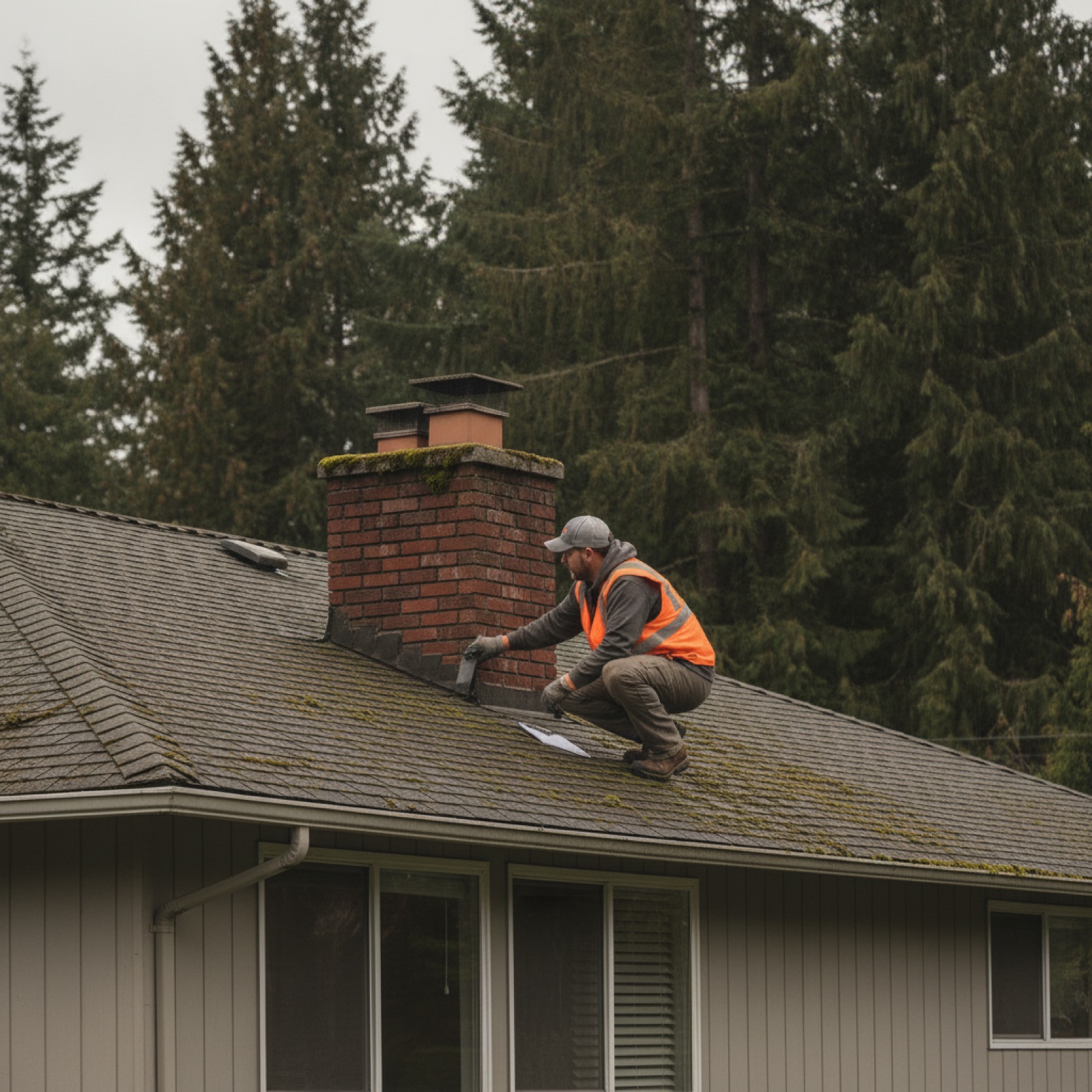
If your roof is more than 20 years old, Clark County saw a significant wind event recently, or you're buying or selling a home in Vancouver, the answer is yes. Schedule the inspection. For everyone else, it depends on what you're seeing and when you last had a professional look.
Why Vancouver WA Roofs Need More Frequent Attention Than the National Average
Clark County receives roughly 39 inches of rain annually, and most of that falls between October and April. That concentrated wet season is harder on roofing materials than the national average suggests. Moss and algae take hold on north-facing slopes and tree-shaded sections across Vancouver neighborhoods like Hazel Dell, Orchards, and Salmon Creek. Moss roots lift shingle edges, break the bond of sealant strips, and hold moisture against the decking long after a rain event ends.
The Columbia River Gorge adds another variable most roof manufacturers don't account for: east-wind events. These high-velocity gusts hit southwest-facing slopes hard, lifting flashing, loosening ridge caps, and working nails free over time. A roof that handles a normal Willamette Valley winter without a problem can show significant damage after a single gorge wind event.
Then there are the freeze-thaw cycles. December through February in the Vancouver area straddles 32 degrees often enough that water works into small cracks, freezes, and expands. The most vulnerable spots are step flashing at chimneys and dormers, sealant around penetrations, and the butted seams at valleys.
Most shingle warranties rate performance under average conditions. Southwest Washington is not average conditions.
Situations That Require an Inspection Now
Some situations don't leave room for waiting:
After a gorge wind event. If the National Weather Service issued a wind advisory for Clark County and your roof is older than 10 years, schedule an inspection within a few weeks. Lifted ridge caps and loosened flashing rarely look dramatic from the ground, but they allow water entry at the next rain.
Your shingles are 20 years old or older. A large share of Vancouver WA homes were built between the 1970s and 1990s, putting original asphalt shingles at or past the 25 to 30-year mark. An inspection now tells you whether you're managing a 2-year timeline or a 5-year one, and gives you documentation before any Clark County permit process begins.
You're buying a home. A seller's disclosure doesn't tell you about granule loss in a back valley or soft decking under a north-facing slope. Include a roof inspection in your purchase contingency.
You're listing a home. Buyers in the Clark County market routinely order their own inspections. Sellers who skip a pre-listing inspection often face last-minute renegotiations when the buyer's inspector finds something. Knowing what's there lets you address it on your terms, not theirs.
You're seeing interior signs. Water stains on ceilings, damp insulation in the attic, or daylight visible from inside the attic are not watch-and-wait situations. Those are active failures.
You need a permit. Clark County requires a permit for full roof replacements. An inspection report documents the scope and condition before the permit application, which avoids delays once you're ready to move.
Situations Where You Can Wait, and What to Watch For
Not every concern is urgent. If your roof is under 15 years old with no known storm damage, you've had an inspection in the last three years, and you're not seeing any interior moisture signs, you have some runway. Watch for these during your own visual check from the ground:
- Curling or cupping at shingle edges, especially on south and west-facing slopes
- Dark streaking (algae) or green patches (moss) that are expanding rather than staying contained
- Granule accumulation in gutters after rain, beyond what's normal for a newer roof
- Flashing that looks lifted, bent, or separated at chimneys, skylights, or dormers
If any of those develop, move the inspection up. If your roof is over 20 years old and none of those are visible yet, you're still not in the clear. Schedule an inspection within the next 12 months.
What a Vancouver WA Inspector Actually Checks That a DIY Walk-Around Misses
A professional inspector does more than look at shingles from the peak. In a Clark County inspection, here's what gets evaluated that a walk-around typically misses:
Attic ventilation and moisture. Condensation in the attic accelerates decking rot from below, and it is invisible from the exterior entirely.
Decking condition under intact shingles. Soft spots and rot are found by walking the roof carefully and probing problem areas. They are not visible from the yard.
Flashing integrity at every transition. Step flashing at chimneys, apron flashing at skylights, and valley metal all require close examination. A loose piece of flashing looks fine at 20 feet and fails at the next hard rain.
Sealant condition around penetrations. Pipe boots, vents, and HVAC penetrations use sealant that degrades faster than shingles do. A cracked boot is one of the most common sources of leaks in Vancouver area homes.
Ridge cap and hip nailing. East-wind events work ridge caps loose from below, and the damage isn't visible until the cap lifts during the next significant gust.
How to Choose a Licensed Roof Inspector in Clark County
In Washington State, roofing contractors must be licensed through the Department of Labor and Industries. Verify any inspector's license before booking. Beyond licensing:
- Ask whether they carry general liability and workers' compensation. Unlicensed or uninsured inspectors are common in the area and create liability if someone is injured on your property.
- Ask for a written report with photos, not just a verbal summary. If a Clark County permit process is involved, you need documentation.
- A reputable inspector will not upsell you on repairs during the inspection itself. The report should stand on its own as an objective assessment.
Safecover provides roof inspections across Clark County with written reports and photo documentation so you have something to act on.
What to Do After You Get the Report
A roof inspection report typically falls into one of three categories:
No action required. The roof has meaningful life remaining. File the report, note the expected lifespan, and schedule the next inspection in three to five years.
Maintenance and spot repairs. Specific items need attention now: moss treatment, flashing resealing, a few cracked shingles. These are low-cost fixes that protect a structurally sound roof and buy it more years.
Replacement planning. The report documents end-of-life condition. This is useful for budgeting, for pulling a Clark County permit, and for any listing negotiation.
Do not sit on a report in the third category. In Vancouver WA, the window between "needs replacement" and "active water damage to the interior" is often one rainy season.
If you're in one of the situations above and you're not sure where your roof stands, get a professional look before October. Schedule a roof inspection with Safecover and get a written report you can act on.
Free Roof Estimate
Questions after reading this? Our local team is happy to help. No pressure, no obligation.
Request Free Estimate(360) 304-8055Need a Roof Repair or Replacement?
Get a free, no-obligation estimate from our roofing experts today.