Roof Leak Right Now? How to Triage, Patch, and Know When to Call a Roofer in Vancouver WA
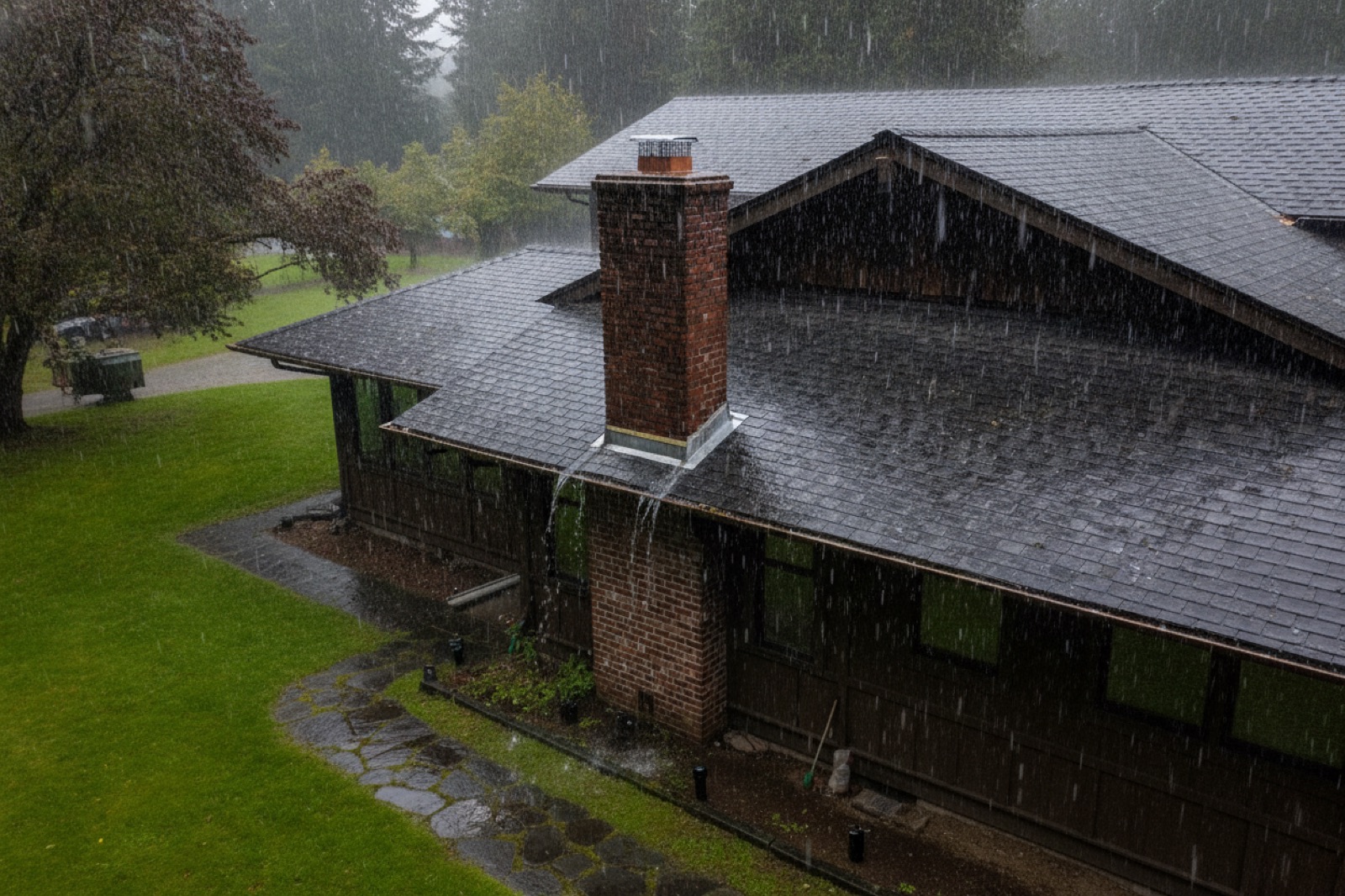
If you're standing in your living room watching water drip into a bucket, the first question is simple: does this buy you a few days to schedule a repair, or do you need to call someone today? The answer depends on where the water is coming from, how fast it's moving, and what the next 72 hours of weather look like.
Here's the short version: a slow drip from a single point during a rain event is often manageable with a temporary patch for a few weeks. Fast-moving water, stains that spread while it's raining, or any signs of structural softness mean you call a roofer now.
How Bad Is Your Leak? A Quick Severity Assessment
Start by getting into the attic with a flashlight and looking for:
- Active dripping or running water during rain
- Dark staining or wet insulation spread across a wide area
- Soft or spongy decking (the plywood layer under your shingles)
- Daylight visible through the roof deck
- A mold or mildew smell, which usually means the leak has been going longer than you realized
A single wet spot above a penetration (a pipe, skylight, or chimney) with no structural softness around it is a lower-urgency situation. Multiple wet areas, a spreading stain, or anything that feels soft underfoot are higher-urgency.
Trace the water back as far as you can. In Vancouver WA homes, wind-driven rain from the southwest regularly forces water under lifted shingles or ridge caps, then runs along the deck before dripping through the ceiling. The interior stain is often several feet away from the actual breach, which is why locating the entry point matters more than chasing the drip.
Temporary Fixes That Actually Hold in Pacific Northwest Rain (and Ones That Don't)
A temporary fix is exactly that: temporary. Done correctly, it protects your home for two to six weeks. Done wrong, it fails during the next atmospheric river and leaves you with a worse problem.
What works:
- Roofing tarps secured with 2x4 cap boards. A heavy-duty polyethylene tarp lapped over the ridge and weighted or screwed down at the edges holds well through wind-driven rain. Lap the tarp at least 3 feet past the damage on all sides. This is the same method a contractor uses for storm damage.
- Roofing cement or peel-and-stick flashing tape over a clean, dry surface. If you have a two-day or longer dry window, roofing cement pressed firmly over a small shingle crack or separated flashing can hold for several weeks. The surface must be completely dry and free of moss or debris, or adhesion fails on the first rain.
What does not work:
- Caulk or silicone applied to a wet surface. Silicone does not bond to wet materials. It may look sealed but will peel away within days.
- Spray foam. Expands unpredictably, creates dam points where water pools, and is difficult to remove before a proper repair.
- Taping shingles from inside the attic. Addresses nothing at the source and gives you false confidence while water continues entering the roof assembly.
Patching works best for small, well-defined problems: a single cracked shingle or a clearly separated flashing joint. It does not work for moss-damaged shingles, failed pipe boots, or widespread shingle lifting, because the patch covers one symptom while the underlying problem continues.
Warning Signs That Mean You Call a Roofer Today, Not Next Week
Some situations do not have a safe temporary fix:
- Water near electrical fixtures, panels, or wiring. Shut off the circuit if water is near lights or outlets and call the same day.
- A sagging ceiling or bulging drywall. A sagging ceiling is holding water weight and can collapse without warning.
- Multiple leak points during a single rain event. This indicates widespread shingle failure, not a localized problem.
- A stain that grew significantly during the last storm. Fast-spreading moisture means the roof assembly is failing across a broader area.
- A roof that is 20 or more years old. A patch at this stage delays an unavoidable cost and can mask how much decking has deteriorated underneath.
Clark County's Rain Calendar: Your Repair Window Is Shorter Than You Think
Clark County averages about 42 inches of rainfall per year, concentrated between October and April. Atmospheric river events during fall and winter can drop 2 to 4 inches in 24 hours, leaving no dry window for any exterior repair, temporary or otherwise.
Freeze-thaw cycles create an additional problem through January and February. Vancouver WA temperatures oscillate near 32 degrees F across those months. Water that has seeped into a micro-crack in a shingle or into the roof deck expands overnight, widening the crack and enlarging the damage. What looks like a small drip in December often becomes a structural issue by February.
Practical dry repair windows run roughly June through September. A leak discovered in October is especially urgent because there is no realistic outdoor repair window coming for at least seven months. A tarp can bridge that gap, but getting a proper repair done before rainy season starts is always the better outcome.
One more local detail worth knowing: north-facing roof slopes accumulate moss faster on Vancouver WA homes because limited sun exposure keeps the surface damp. Moss holds moisture against shingles, accelerates granule loss, and lifts shingle edges over time. If your leak is on a north-facing slope, surface patching is rarely enough.
What a Roofer Finds That a Patch Misses
A licensed roofer doing a leak inspection looks for the entry point, not just the wet spot. The two are often in different locations. Common sources that a surface patch cannot address:
- Pipe boots. The rubber seals around plumbing vents typically last 10 to 15 years. When they crack, water runs down the vent pipe and appears inside the home well away from the boot. Replacing a pipe boot takes under an hour, but you have to identify it correctly first.
- Counter-flashing separation at chimneys and skylights. Wind-driven rain pushes through separated flashing even when the shingles around it look intact from the ground.
- Lifted shingles along the rake or ridge. Nailing them back without inspecting the decking underneath leaves deteriorated wood in place.
- Saturated insulation. Wet fiberglass or cellulose loses its R-value and, left in place, becomes a site for mold. A complete repair includes removing and replacing saturated material.
A moisture meter reading tells a roofer how far the water has traveled beyond the visible stain. Patching without that information means rot or mold continues after the drip stops.
Getting Roof Leak Repair in Vancouver WA
If the assessment above puts you in the "call today" category, don't wait on the weather. Emergency tarping happens in rain. The full repair gets scheduled for the next dry window, but the tarp protects your home in the meantime.
If you have a couple of weeks, use that time to get an accurate estimate rather than spending money on a patch that may fail before the repair window arrives. Knowing the real scope gives you the information to make a sound decision.
Safecover serves Vancouver WA and the surrounding Clark County area. If you have an active leak and want a straight answer on whether a patch is enough or a repair is overdue, request an estimate.
Free Roof Estimate
Questions after reading this? Our local team is happy to help. No pressure, no obligation.
Request Free Estimate(360) 304-8055Need a Roof Repair or Replacement?
Get a free, no-obligation estimate from our roofing experts today.