How Long Does a Roof Repair Last in Southwest Washington?
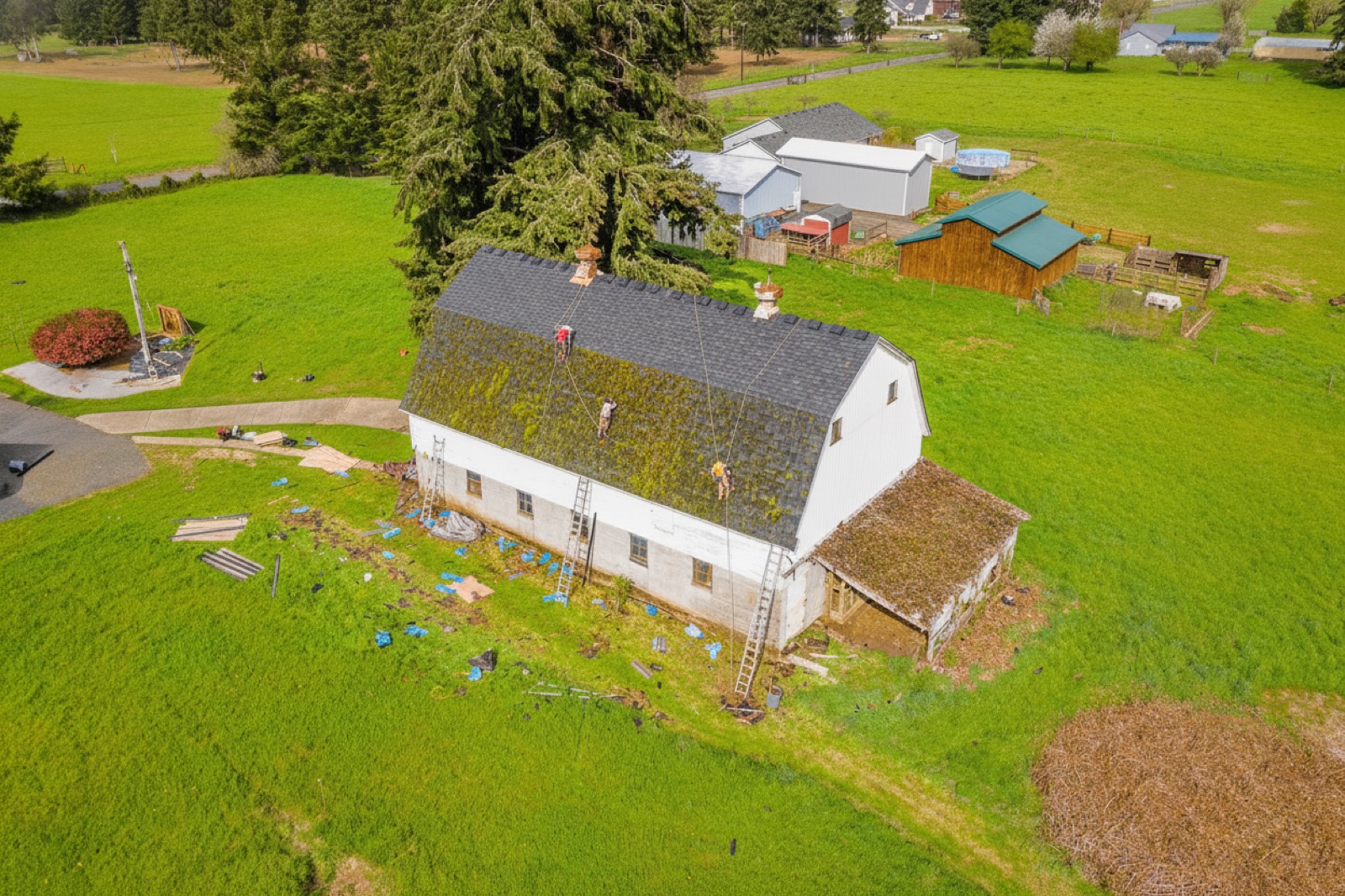
A roof repair in Southwest Washington can hold for 5 to 15 years. It can also fail in a single wet season. Which outcome you get depends on the type of repair, whether the contractor addressed the root cause, and how well the repaired zone weathers the PNW's specific stressors: sustained moisture, biological growth, and occasional hard freeze.
Here is what drives that range and how to know which side of it you are on.
Three Things That Determine How Long a Repair Lasts
Before getting into timelines, three variables matter more than any general rule.
Repair type. A pipe boot swap is a contained mechanical fix. A shingle patch over a decking problem is not. The repair type tells you whether the failure mode is truly addressed or just covered.
Root cause. If water entered because a valley was installed with insufficient overlap and the repair only re-seals the surface, the underlying condition returns. Repairs that treat symptoms rather than causes tend to fail within two to three wet seasons in this climate.
Material condition at the repair boundary. Repairing into brittle, granule-bare shingles adjacent to the damaged zone shortens the effective life of even a good patch. The repair holds; the next shingle over fails.
Lifespan by Repair Type
These are honest ranges for typical residential conditions in Clark, Cowlitz, and Lewis Counties. A repair at the low end of a range was probably done into compromised surrounding material or without treating the biological growth that accelerated the original failure.
Shingle patch (3-tab or architectural): 5 to 12 years when installed into sound neighboring shingles with proper overlap and sealed edges. Closer to 3 to 5 years on north-facing planes where moss re-establishes quickly.
Flashing repair (step, counter, or apron): 8 to 15 years for a properly re-bent or replaced metal section with fresh sealant at penetrations. Sealant-only flashing repairs with no metal work typically last 3 to 7 years before the sealant cracks or lifts.
Valley repair: 5 to 10 years if the damaged section of metal or woven shingle valley is replaced, not just re-sealed. Valley sealant-only repairs in Douglas fir and big-leaf maple debris zones often fail in 2 to 4 years because retained moisture keeps the sealant from fully curing and cycling properly.
Chimney repair: Varies widely. A re-mortared crown and re-flashed base can last 10 to 20 years on a well-built chimney. A seal-and-go approach with rubberized compound on cracked mortar is typically a 2 to 5 year solution in this climate.
Pipe boot (rubber collar replacement): 10 to 15 years with a neoprene or EPDM boot installed correctly. If the old boot was caulked rather than replaced, expect 3 to 6 years before the caulk cracks.
How Southwest Washington's Climate Shortens a Repair
Clark County averages 37 to 44 inches of rain per year. What matters even more than the annual total is the pattern: sustained wet periods from October through April keep roofing materials perpetually damp for six or more months. Sealants, adhesives, and granule adhesion all degrade faster under continuous moisture than under the same volume of rain spread across a drier summer.
Moss and algae. North- and east-facing roof planes in Vancouver, Battle Ground, and Ridgefield accumulate moss and algae within 2 to 3 years of a repair if biologics are not treated at the time of work. Moss rhizoids work under shingle tabs and lift edges, directly reopening a sealed zone. If your contractor did not apply a zinc or copper treatment or recommend a zinc strip at the ridge, the biological re-growth timeline is already running.
Freeze-thaw at elevation. Properties in Cowlitz and Lewis Counties, particularly around Packwood, Morton, and Randle, face a specific threat: fall-applied cementitious flashing compounds that absorb water and then expand when temperatures drop. A flashing repair done in October that looks solid in November can show hairline cracks by February. Metal replacement rather than compound repair is more durable in these zones.
Wind-driven rain through the Gorge. Southwest-to-northeast wind events, amplified through the Columbia River Gorge corridor, push rain under shingle overlaps at angles standard repairs often do not account for. A patch that seals correctly under vertical rain may admit water during a sustained Gorge wind event. This is one reason valley and eave repairs on south- and west-facing planes need a wider sealant footprint and tighter nail patterns than minimum spec.
Organic debris load. Douglas fir needles and big-leaf maple leaves collect in valleys, behind dormers, and at crickets. This material holds moisture against flashing and sealant joints for days after a rain event clears. In a drier climate the same repair might see that joint dry out between storms. In Southwest Washington it often does not.
Signs a Repair Is Holding vs. Starting to Fail
Check these after the first full wet season following a repair:
- Interior ceiling or attic insulation. No new staining directly above or adjacent to the repaired zone. Staining that tracks down from the repair site is the clearest early signal.
- Shingle edges at the patch boundary. Should lie flat with no lifting tabs. Lifted edges near a patch mean adhesion is gone and wind-driven water now has a path.
- Flashing sealant condition. Should be continuous with no visible cracking, separation, or bubbling at the sealant bead. Bubbling means the sealant was applied over a wet surface.
- Moss or algae return. Any biological growth on or immediately around the repaired zone within 18 months means the biologics were not treated and the original failure mechanism is re-activating.
When a Repair Buys Real Time vs. When to Replace
A repair makes financial sense when the surrounding roof material is in good shape, the cause is isolated (one pipe boot, one flashing section, storm damage to a contained area), and the roof has 8 or more years of remaining life in its unaffected sections.
Replacement is the better call when:
- The shingles are at or past their rated life. Standard architectural shingles in this climate typically run 20 to 25 years, shorter than the 25 to 30 years common in drier regions.
- Multiple repair zones exist. Two or three separate leak points usually mean the roof is failing broadly, not at isolated spots.
- The decking under a repair zone is soft or delaminated. A durable repair is not possible on degraded substrate.
- Moss has covered 30 percent or more of the roof surface. At that point the biologics have mechanically damaged more shingles than any repair touches.
If you are not sure which situation you are in, a roof inspection gives you a clear picture before you commit to either path.
Safecover serves Clark, Cowlitz, and Lewis Counties and can give you a straight read on whether your repair will hold or whether the math points toward replacement. Request an estimate and get an honest answer before the next rain season starts.
Free Roof Estimate
Questions after reading this? Our local team is happy to help. No pressure, no obligation.
Request Free Estimate(360) 304-8055Need a Roof Repair or Replacement?
Get a free, no-obligation estimate from our roofing experts today.