When to Schedule Roof Repairs in Southwest Washington (And When to Act Fast)
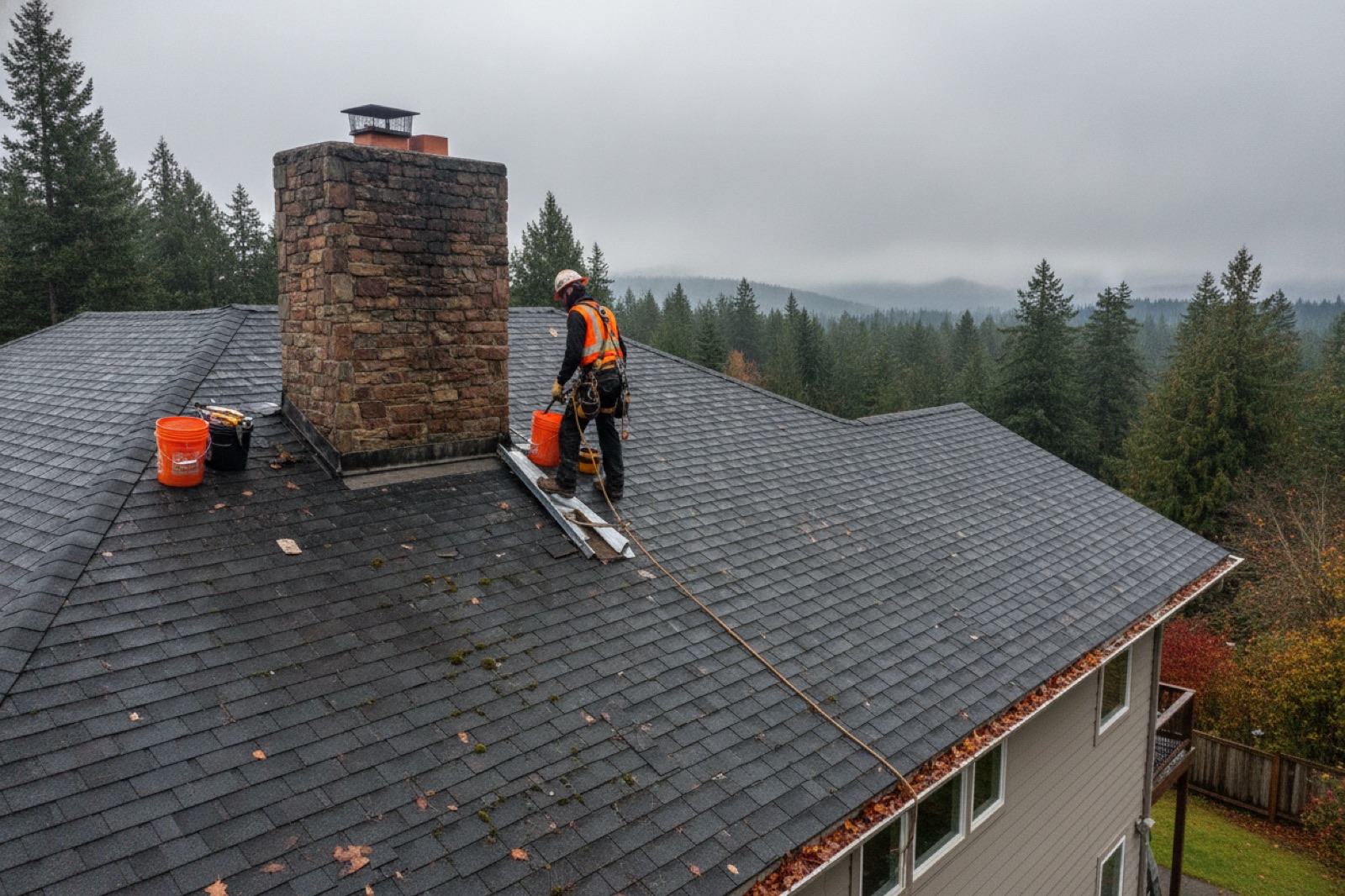
The short answer: if you have a leak, missing shingles, or visible damage, schedule repairs now, regardless of the season. If your roof is aging but holding, the July-through-September dry window gives contractors the best conditions for adhesive-dependent work.
That's the decision tree in two sentences. Here's the reasoning behind it.
Why Timing Roof Repairs Matters More in the PNW
Southwest Washington is not a forgiving climate for deferred maintenance. The region receives roughly 40 to 45 inches of rain annually, nearly all of it concentrated between October and May. That's seven months of continuous wet exposure for any compromised roofing system.
In drier climates, a cracked sealant bead or lifted shingle tab might sit dormant for months. In Clark, Cowlitz, and Lewis counties, the same defect is actively wicked by wind-driven rain every week from fall through spring. A small problem in September can be a wet ceiling by November.
Clark County averages fewer than 144 sunny days per year. That limits the window when roofing adhesives cure properly, when surfaces dry enough for thorough inspections, and when a crew can work safely for full days without interruption.
What the Wet Season Does to an Unrepaired Roof
Water doesn't just leak straight down. It travels along rafters, pools in low spots in the attic, wicks into insulation, and shows up as a stain far from the actual entry point. By the time you see a brown ring on your ceiling, moisture has likely been present for weeks or months.
The wet season also accelerates moss and algae growth on north-facing slopes. Overcast PNW winters give spores exactly what they need: moisture, low light, and cool temperatures. Moss holds water against the shingle surface, speeding granule loss and shortening the life of asphalt shingles. A north-facing slope with unchecked moss growth can lose years of useful life in a single wet season.
Beyond shingles, gutters and flashing take the most stress from continuous rain. A loose flashing joint around a chimney or skylight that drips slightly in summer can allow gallons of water intrusion during a sustained November storm.
The Dry Window: July Through September
If your roof has minor wear but no active leak, July through September is the right time to schedule repairs. Here's why that window matters technically, not just in terms of weather comfort:
- Self-sealing asphalt shingles require surface temperatures between roughly 40 and 85 degrees Fahrenheit to form a proper thermal bond. In winter, that bond may not set, leaving tabs vulnerable to wind uplift.
- Roofing cement and lap sealants cure faster and more completely in dry conditions. A repair done in December rain can hold temporarily but may need to be redone.
- Dry sheathing surfaces allow inspectors to confirm whether damage is limited to the surface layer or has reached the decking underneath.
- Contractors can schedule and complete work in predictable weather without rain delays pushing jobs into extended timelines.
Southwest Washington's dry window is real but short. Temperatures stay mild, humidity drops, and the risk of mid-job weather delays is lowest. Homeowners who wait until August to call typically find contractors booked several weeks out. If summer repair is the goal, call in May or June to get on the schedule.
Repairs You Cannot Afford to Postpone Until Summer
Some damage cannot wait for ideal conditions. These situations require immediate attention, regardless of the season:
Active leaks. Any water entering the living space is damaging insulation, framing, and drywall in real time. Emergency tarping can limit damage, but a proper repair should follow as soon as a qualified crew can safely work.
Missing or displaced shingles. A gap in the roofing surface during a Pacific Northwest fall is not a minor issue. A single storm can saturate exposed decking in hours.
Damaged flashing. Flashing failures around chimneys, skylights, dormers, and valleys are among the leading causes of roof leaks in Southwest Washington. If a visual inspection shows lifted, cracked, or separated flashing, the next heavy rain will find it.
Ice dam precursors in the foothills. Cowlitz and Lewis County homeowners in elevated terrain see more freeze-thaw cycles than the lower Vancouver metro. Damaged or compressed attic insulation that allows heat to escape the roof deck creates the conditions for ice dams, which force water under shingles. Addressing attic air sealing and insulation before the first freeze matters.
A roofing contractor can work in winter and wet conditions. The repair may cost slightly more due to weather delays and additional prep, but that cost will be far less than the water damage that accumulates through a wet season with a known defect.
How Freeze-Thaw Cycles Affect Clark and Cowlitz County Roofs
The lower Vancouver and Portland metro areas rarely experience sustained freezes. The foothills are different. Communities in Cowlitz County and the higher elevations of Clark County see repeated cycles where temperatures drop below freezing at night and warm above it during the day, throughout winter.
Each cycle stresses roofing materials. Asphalt shingles become brittle in cold and expand slightly when temperatures rise. Sealant strips crack. Flashing joints open micro-gaps. Any water that has entered a crack freezes, expands, and widens the opening.
This means a roof that appears functional after an October inspection may develop active leaks by February if it had undetected micro-damage when the freeze cycles began. Foothills homeowners should prioritize a fall inspection, ideally in September or October, to find and close vulnerabilities before the cycle starts.
How to Plan Your Repair Before the Rain Returns
Vancouver WA and Longview WA homeowners often discover winter damage only when spring rains reveal active leaks. By then, the window before next fall is shorter than it appears.
A practical timeline:
- September to October: Schedule a professional inspection while roofs are still dry and accessible. Identify anything that should go on the summer repair queue.
- October through May: Address urgent repairs immediately as they appear. Do not wait for summer.
- May to June: Book summer repair appointments before the contractor calendar fills.
- July through September: Complete adhesive-dependent repairs, replacements, and any work that requires full dry conditions.
The goal is to never be reactive. A known defect deferred from September to July costs more to repair because seven months of wet season have done additional damage to the surrounding decking, underlayment, and framing.
If you are unsure whether your roof needs attention before the next rainy season, a professional inspection is the starting point. Safecover serves Clark, Cowlitz, and Lewis counties and can give you a clear picture of what needs to happen now and what can wait. Schedule a roof repair estimate and get on the calendar before the October rains return.
Free Roof Estimate
Questions after reading this? Our local team is happy to help. No pressure, no obligation.
Request Free Estimate(360) 304-8055Need a Roof Repair or Replacement?
Get a free, no-obligation estimate from our roofing experts today.