Roof Repair or Replacement in Vancouver, WA: How to Know Which One You Actually Need
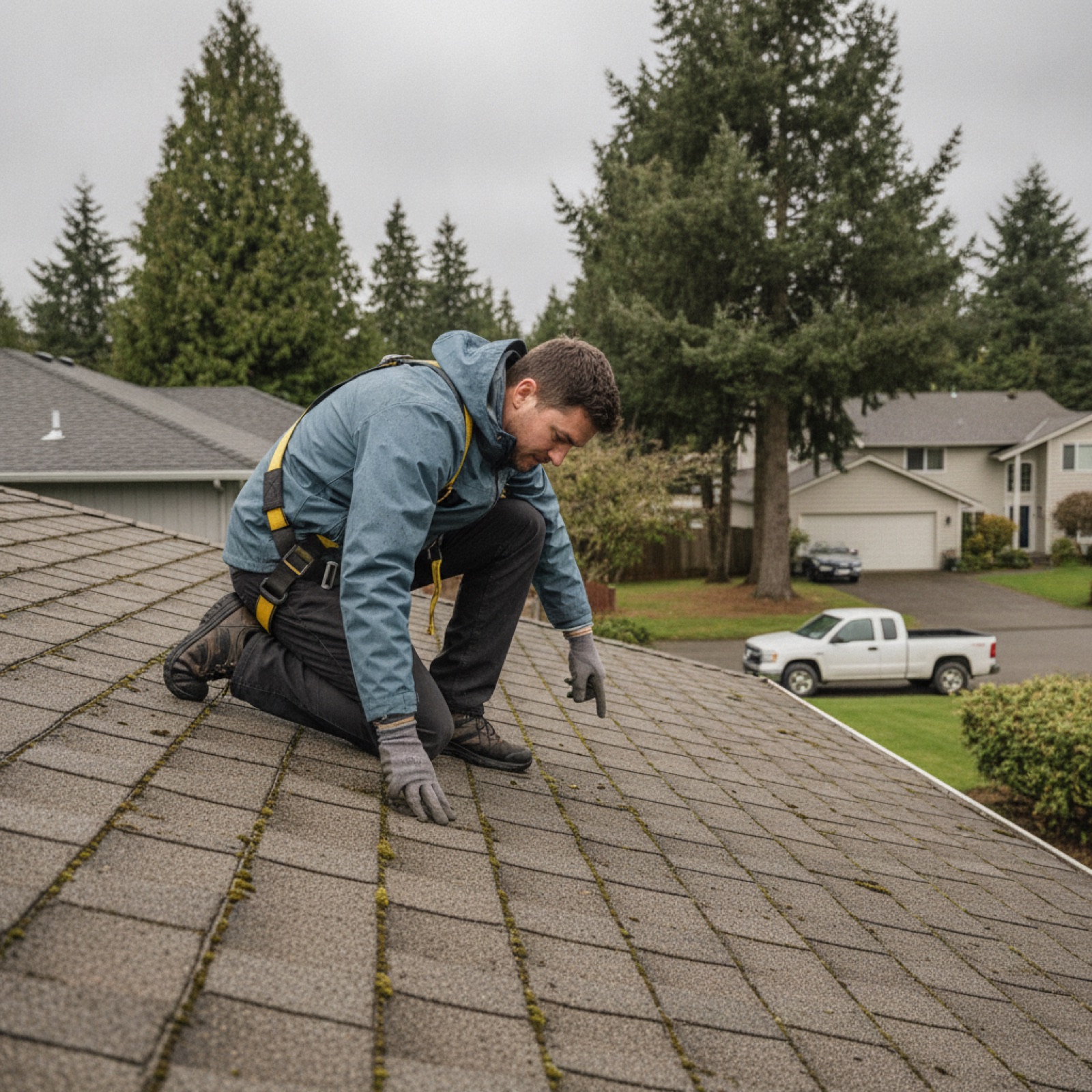
The honest answer: most Vancouver-area homeowners calling about a roof problem don't need a full replacement. But a meaningful number do, and Clark County's specific conditions make that calculus different here than in a drier climate. Here's how to think it through.
The Short Answer: When Repair Is Enough
A repair makes sense when the damage is isolated, the roof is under 15 to 20 years old, and the underlying deck and structure are sound. If you've got a few missing shingles after a wind event, a flashing failure around a chimney, or a small section of lifted material at a rake edge, repair is usually the right move. The goal is to extend a roof that still has meaningful life left, not to delay an inevitable replacement by a year or two.
If the roof is leaking in multiple spots, the decking is soft underfoot, or more than a third of the shingles show heavy granule loss, repair gets expensive fast and often doesn't fix the underlying problem.
Signs Your Vancouver, WA Roof Can Still Be Repaired
These indicators point toward repair being the right answer:
- Isolated damage in one area. A single section of lifted or missing shingles, one failed valley, or a flashing failure around a vent pipe. If the rest of the roof looks consistent, targeted repair makes sense.
- The roof is under 15 years old. A mid-life asphalt shingle roof with one problem area has years of service left. Replacement at this stage is almost always premature.
- The decking is solid. No soft or spongy spots when a roofer walks the surface means the structural layer is intact.
- No interior moisture damage. A single leak caught early, before it reaches the sheathing or insulation, is repairable without cascading consequences.
- Granules are largely intact. Granule coverage protects asphalt shingles from UV degradation. If the damaged area is isolated and the rest of the roof holds its granules, the roof still has life.
When PNW Conditions Push You Toward Replacement Instead
Vancouver's climate accelerates wear in ways that don't show up clearly on a quick visual scan. Clark County averages over 38 inches of rain per year. That sustained moisture works on aging shingles, deteriorates flashing caulk, and feeds moss and lichen growth that most homeowners underestimate.
Moss is especially common in older Vancouver neighborhoods. Hazel Dell, Orchards, and Fruit Valley all have high concentrations of homes built in the 1970s and 1980s, many with original or once-replaced roofs now reaching the end of their service life. The cool, overcast climate means moss doesn't just sit on top of shingles. It works under tab edges, lifts the material, and traps moisture against the underlying felt. By the time the problem is obvious from the ground, the damage is often extensive.
Columbia River Gorge gap winds create another localized problem. During easterly outflow events, wind-driven rain hits rake edges and valley flashing at angles that normal roof design doesn't fully account for. The result can look like ordinary wear from the street but is systematically worse on east-facing slopes and at roof edges.
Freeze-thaw cycles, driven by cold air mass intrusions from the Gorge, crack caulk and open seams around chimneys, vents, and skylights. This is often repairable on its own, but on a roof that's already 20-plus years old, recurring freeze-thaw failures are frequently a sign that multiple systems are failing at once.
The case for replacement strengthens when:
- Moss or lichen growth is widespread and the shingles show significant granule loss
- The roof is 20 years or older and showing deterioration across multiple sections
- Leaks have recurred after a previous repair
- Multiple areas need repair simultaneously, putting total repair costs within range of a replacement
- The decking has soft spots or water damage in more than one location
How Roof Age and Material Type Change the Calculus
Standard 3-tab asphalt shingles, common in pre-1990s Vancouver homes, carry a nominal 20 to 25-year lifespan. Under PNW conditions, real-world performance is often closer to 15 to 20 years. Architectural (dimensional) shingles installed since the 1990s typically last 25 to 30 years here.
If you're at 80% or more of a roof's expected lifespan, the math on repair changes. A repair that costs $800 to $1,500 may deliver only 2 to 3 more years before the next failure. That's not money well spent. Replacement starts to make more economic sense when you're close to the end of service life and the damage isn't isolated.
Metal roofing is a different category. Standing seam metal, used on a portion of newer Vancouver-area homes, has a much longer service life and is more resistant to PNW moisture and moss. Repairs on metal roofs are often straightforward and don't carry the same replacement-creep risk that aging asphalt does.
The Cost Difference: Repair vs. Replacement in Clark County
Roof repairs in the Vancouver area typically run $400 to $2,500 depending on scope. Flashing repairs and small shingle patches are on the lower end. Valley replacements, chimney re-flashing, and repairs involving decking work run higher.
Full roof replacement in Clark County generally runs $9,000 to $18,000 for a typical single-story home, depending on roof size, pitch, material, and current labor costs. Steeper pitches and complex roof lines push costs up. Mid-range architectural shingles are the most common choice. Premium shingles, metal, or shake-profile materials add cost.
One thing worth knowing: Clark County building codes require a permit for roof replacement when more than 25% of the roof deck is being replaced. That permit process affects both timing and cost on larger jobs, and a local roofer should factor it into their estimate upfront.
What a Roof Inspection Actually Tells You
A visual inspection from the ground tells you roughly nothing beyond obvious missing shingles or sagging sections. What matters is what a roofer finds when they're on the roof: the condition of flashing at every penetration point, granule coverage across slopes, the state of the valleys, and whether the decking feels solid underfoot.
A good roof inspection in Vancouver covers all of this and delivers a written summary of what was found, what's causing any leaks, and an honest opinion on whether repair extends meaningful life or simply delays the inevitable. It should not be a sales pitch for replacement on a roof that still has years left.
How to Get an Honest Assessment From a Local Roofer
The roofer you want is one who's willing to tell you to repair when that's the right answer. If the first conversation leads immediately to a full replacement quote without a thorough inspection first, that's worth noting.
Ask specifically:
- What is the age and remaining service life of this roof based on what you found?
- Is the decking sound in all areas?
- If I repair now, how long realistically before I'm looking at replacement?
- What's driving the failure: the shingles, the flashing, or both?
The answers matter more than any single number on an estimate.
If you're not sure where your roof stands, a Safecover inspection gives you a straight answer with no pressure attached. Schedule one here.
Free Roof Estimate
Questions after reading this? Our local team is happy to help. No pressure, no obligation.
Request Free Estimate(360) 304-8055Need a Roof Repair or Replacement?
Get a free, no-obligation estimate from our roofing experts today.