Why Roof Repairs in Olympia, WA Don't Always Last (And What Good Ones Do Differently)
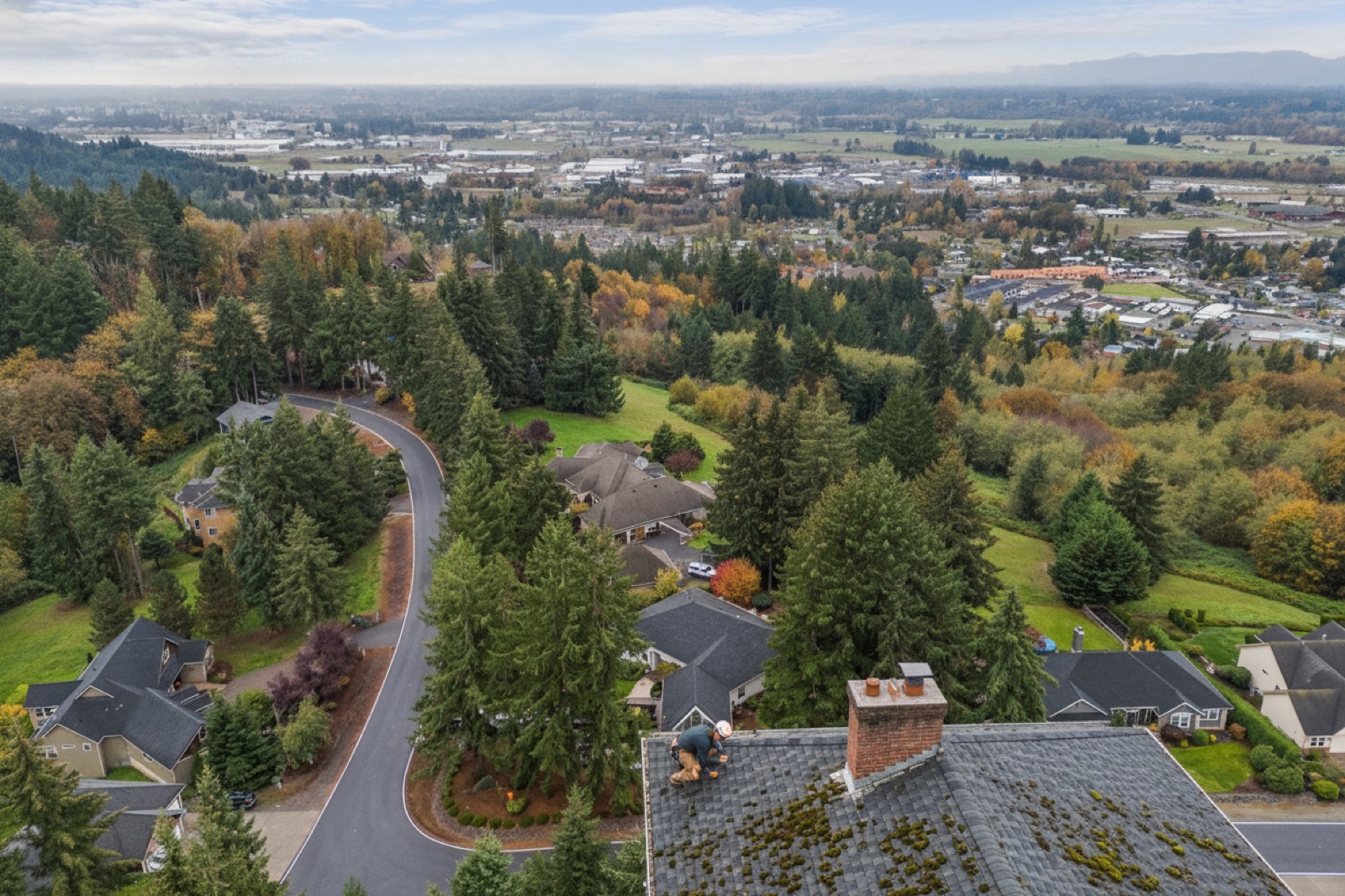
Most roof repairs in Olympia fail for predictable reasons. The climate here, roughly 51 inches of rain per year and overcast skies that keep surfaces damp from October through June, creates conditions where a patch applied without a full system check will break down within one or two wet seasons. A repair that holds looks different from the start.
Olympia's Climate Is Genuinely Hard on Roof Repairs
Thurston County averages about 51 inches of annual precipitation, placing it among the wetter lowland areas in the Pacific Northwest outside the coast. That number alone does not tell the full story. Rain total matters less than duration: Olympia's overcast winters mean roof surfaces stay damp for weeks at a stretch without drying out. Shingles that never fully dry stay saturated longer at the seams, granule loss accelerates, and any adhesive or sealant applied under wet conditions can fail within months.
The freeze-thaw window from November through February adds a mechanical stress layer on top of the moisture. Water that infiltrates a poorly sealed repair expands when it freezes, widening any gap it found. By the time you notice a drip, the repair may have cycled through a dozen freeze-thaw events.
The usable dry window for ideal repair conditions runs roughly July through September. Emergency repairs happen year-round in Olympia, which is a practical reality, but it means the repair method and materials have to compensate for conditions the installer cannot control.
Five Reasons Repairs Fail Early in Thurston County
1. Wrong sealants for sustained moisture. Some contractors use general-purpose roof cement that is not rated for continuous wet conditions. It may look fine in August and degrade by February.
2. Missing shingles replaced without inspecting the substrate. A blow-off shingle often signals a damaged or saturated decking section underneath. Laying new shingles over compromised plywood does not restore integrity.
3. Ignoring adjacent shingle condition. The shingles around a repair zone are often in similar shape. Spot repairs that leave brittle neighbors in place shift the failure point one shingle over.
4. No flashing inspection. The vast majority of active leaks in Olympia homes originate at flashing transitions, not from field shingles. A repair that skips the flashing may solve nothing.
5. No moss treatment. Moss present at the time of repair and left untreated will lift the new shingles within one growing season. Olympia's persistent moisture means moss colonizes fast, including on freshly installed material.
Moss and Algae: The Factor Most Repair Quotes Ignore
Moss is endemic to Olympia, not a cosmetic issue. Root filaments physically penetrate the shingle mat, lifting edges and breaking the factory seal on tab shingles. Any patch applied over or next to active moss is working against an organism that is pulling in the opposite direction.
North-facing slopes near Capitol Lake and on Westside homes see the heaviest colonization because they stay shaded and damp longest. A quality repair in these conditions includes a zinc or copper treatment strip, or a moss-kill application followed by a rinse-down window before new material goes on.
If a repair quote does not mention moss treatment at all and you have visible moss on the roof, ask about it directly. The answer tells you whether the contractor is looking at the whole system or just the damaged square.
Flashing Is the Repair That Matters Most in a Rain-Heavy Climate
In Olympia's rainfall volume, flashing failures account for a disproportionate share of interior water damage. Flashing is the metal that seals roof-to-wall transitions, valleys, chimneys, skylights, and vents. When it is undersized, improperly lapped, or sealed with caulk that has dried out, water finds its way in during sustained rain events.
South Capitol and Westside neighborhoods have a high concentration of 1950s to 1970s composition-shingle homes. Flashing installed in that era was often undersized by current standards, and it may have been re-caulked rather than replaced through multiple roof cycles. By the time a homeowner notices a leak, the flashing behind the wall may have been channeling water for months.
A repair scoped correctly for Olympia includes a flashing inspection as a standard step, not an add-on. If you are quoted for shingle work only and there is no mention of checking valley or chimney flashing, that is a gap worth flagging.
What to Ask Before Signing a Repair Contract in Olympia
A few direct questions sort out capable contractors from ones who will leave you calling again in two winters:
- What does the substrate look like under the damaged area? If they cannot answer this without a preliminary inspection, ask how they plan to find out before work starts.
- How are you addressing the flashing in this area? A specific answer (replace, re-seal, or no action needed because of a named reason) is better than a vague "we'll check it."
- What is the moss situation, and what does the repair include for it? If there is visible moss, the scope should include treatment.
- What materials are you using, and are they rated for sustained moisture? Specific product names or manufacturer specs are a good sign.
- What does the warranty cover, and for how long? Two to five years on workmanship is a reasonable range for a quality repair. A lifetime warranty on a patch job is a marketing term, not a commitment.
How to Confirm a Repair Actually Held After the First Big Rain
Olympia delivers a natural test case every fall. After the first sustained rain of at least one to two inches, go into your attic with a flashlight and check the area above the repair. Look for wet insulation, water staining on sheathing, or daylight showing through. Do the same on the underside of the roof deck around any skylight, chimney, or dormer.
If everything is dry after that first major rain event, the repair likely held. If you see any staining or moisture, contact the contractor before the problem deepens. Most reputable contractors want to know about a callback quickly, and documenting early is better than discovering hidden rot six months later.
Taking a photo of the repair zone from the attic before the fall rains arrive gives you a clear baseline if you ever need to document a warranty claim.
If you have a repair that failed early or want a second opinion before hiring, Safecover offers roof repair inspections and estimates for Olympia and Thurston County homeowners. We scope the full system, not just the visible damage.
Free Roof Estimate
Questions after reading this? Our local team is happy to help. No pressure, no obligation.
Request Free Estimate(360) 304-8055Need a Roof Repair or Replacement?
Get a free, no-obligation estimate from our roofing experts today.