How to Verify a Roofer in Vancouver, WA Before You Hire Anyone
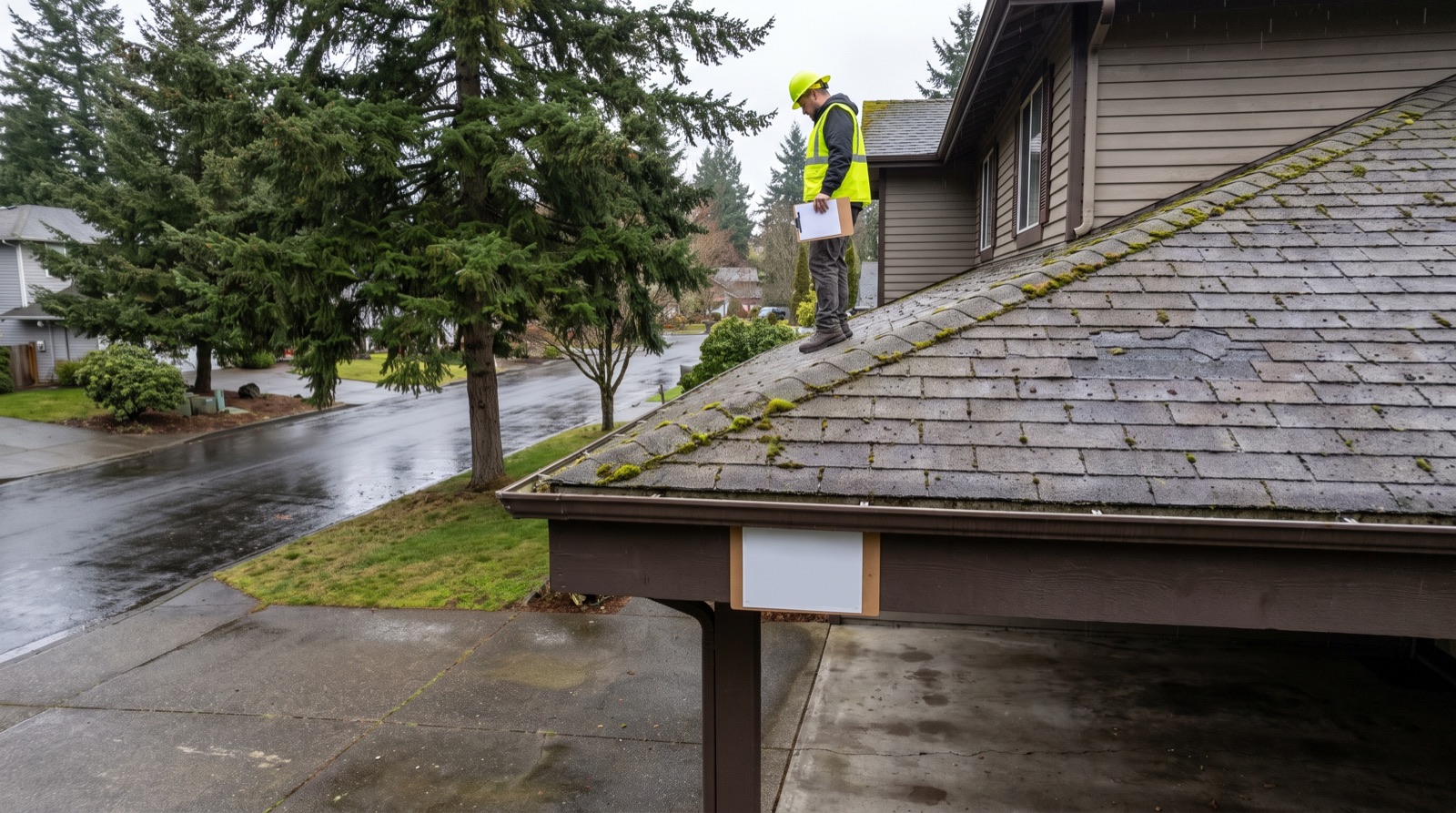
The best roofer in Vancouver, WA is not the one with the biggest truck or the lowest bid. It is the one you can verify before they touch your roof. This checklist walks you through five concrete steps using publicly accessible records, so you can hire with confidence rather than hope.
What Makes Roofer Vetting Different in Vancouver, WA
Vancouver sits in Clark County, right on the Oregon border, and that geography creates a specific problem: contractors licensed in Oregon are NOT automatically licensed in Washington. Many homeowners in Hazel Dell, Salmon Creek, and Felida have discovered this after the fact, when a claim goes sideways and the contractor's coverage does not apply.
The second local wrinkle is storm chasers. Every November through March, wind events rip through the Columbia River Gorge and deposit door-knockers in neighborhoods full of aging roofs. Areas like Orchards and Hazel Dell have a high concentration of 1980s and 1990s composition roofs that are now reaching end of life, which makes them active hunting grounds after any notable storm.
This guide assumes you have already collected a few names. The question is which ones to trust.
Step 1: Look Up Their Washington State L&I Contractor Registration
Washington State Labor and Industries (L&I) requires any contractor performing roofing work worth more than $500 to hold an active registration. This is not optional, and you can verify it yourself in about 60 seconds.
Go to secure.lni.wa.gov and search by company name or UBI number. The lookup shows you:
- Whether the registration is active or expired
- The registration type (general vs. specialty contractor)
- The names associated with the license
- Any violations or complaints on record
If a contractor cannot give you their Washington L&I registration number on request, stop there. A legitimate company keeps this number handy because customers ask for it. An Oregon CCB license is not a substitute.
Step 2: Confirm Active Liability Insurance and Bond Coverage
Registration tells you they are legal. Insurance tells you that you are protected.
Ask the contractor for a certificate of insurance showing:
- General liability coverage (protects your property if they damage it)
- Workers' compensation (protects you if a worker is injured on your roof)
Washington State also requires registered contractors to carry a surety bond. The minimum bond amount is set by L&I and is listed on their website. Ask the contractor what their current bond amount is and request proof. A contractor who hesitates to share this information is worth questioning.
Call the insurer directly to confirm the policy is active. A certificate can be printed with any date on it, but a 30-second call to the insurance company confirms what is current.
Step 3: Pull Their Clark County Permit History
A legitimate roofer pulls permits as a matter of course, not only when a homeowner specifically requests it. If a contractor suggests skipping the permit to save money, that is a red flag, not a favor.
Roofing permits in Vancouver and unincorporated Clark County are issued through the Clark County Building Department. You can ask the contractor directly for examples of permitted jobs they have completed in the area and cross-reference with the county's online permit portal.
Permits matter for two reasons. First, they require an inspection, which gives you an independent set of eyes on the installation. Second, an unpermitted roof can create problems when you sell the house, file an insurance claim, or need warranty service.
If a contractor tells you permits are not required for a re-roof in Clark County, verify that claim independently before accepting it. Requirements vary by scope and jurisdiction, and the contractor should be navigating that, not leaving it to you.
Step 4: Read Reviews Through a PNW Lens
Reviews matter, but you need to read them with a Vancouver-specific filter. Ask these questions while reading:
- Do reviewers mention weather performance after significant rain or wind, not just the install-day experience?
- Do any reviews mention how the contractor handled a warranty issue or a callback?
- Are there reviews from neighborhoods you recognize: Hazel Dell, Salmon Creek, Orchards, Felida, Battle Ground?
- Are the reviews spread across months and years, or clustered in a short window?
PNW climate puts underlayment and flashing quality to the test in ways that warmer, drier markets never surface. Wind-driven rain off the Columbia, freeze-thaw cycles in winter, and the persistent moisture load from overcast months will expose any shortcut in the installation. Reviews written one to two years after the job are more valuable than reviews from installation day.
Check Google, the BBB, and Washington State L&I's complaint database. None of these alone is a complete picture, but together they show patterns.
Step 5: Five Questions to Ask Before You Sign
Ask these before you sign anything. A contractor worth hiring will answer all five without hesitation.
- What is your Washington State L&I registration number? Look it up yourself after they provide it.
- Will you pull the Clark County permit, and who schedules the inspection?
- What underlayment do you use, and why? In the PNW this is a real differentiator. Synthetic underlayment outperforms felt in wet climates. Listen for specifics, not just brand names.
- Who will be on my roof, and are they your employees or subcontractors? Subs need their own coverage, not just the general contractor's policy.
- What does your workmanship warranty cover, and how do I file a claim? Get this in writing before the job starts.
If any answer is vague, ask the follow-up. A roofer who gets defensive about specifics is telling you something.
Red Flags Specific to the Vancouver Area
These patterns show up more often in Clark County than in markets farther from a state line or a major wind corridor:
- Oregon-licensed only. A contractor who gives you an Oregon CCB number instead of a Washington L&I number is not properly registered to work on your home.
- Unsolicited door-knock after a wind event. Out-of-area storm chasers concentrate in neighborhoods after Gorge wind events. They often offer fast timelines and vague credentials. Hazel Dell and Orchards see a surge of these every November through March.
- No local permit examples. If a contractor cannot name a single permitted job completed in Clark County, ask why. Legitimate locals pull permits regularly and can produce examples.
- Payment terms that favor them. A deposit of 10 to 30 percent is normal. Full payment before the job starts is not.
- Pressure to decide today. Material prices and storm damage do not require you to sign today. Any contractor creating urgency around your signature is a concern.
Finding the best roofer in Vancouver, WA comes down to documentation and direct questions. The contractors worth hiring welcome this process because it separates them from the ones who will not hold up under scrutiny.
If you want an estimate from a team that carries Washington L&I registration, pulls Clark County permits on every job, and will answer all five questions above, start with our Vancouver WA roofing page.
Free Roof Estimate
Questions after reading this? Our local team is happy to help. No pressure, no obligation.
Request Free Estimate(360) 304-8055Need a Roof Repair or Replacement?
Get a free, no-obligation estimate from our roofing experts today.